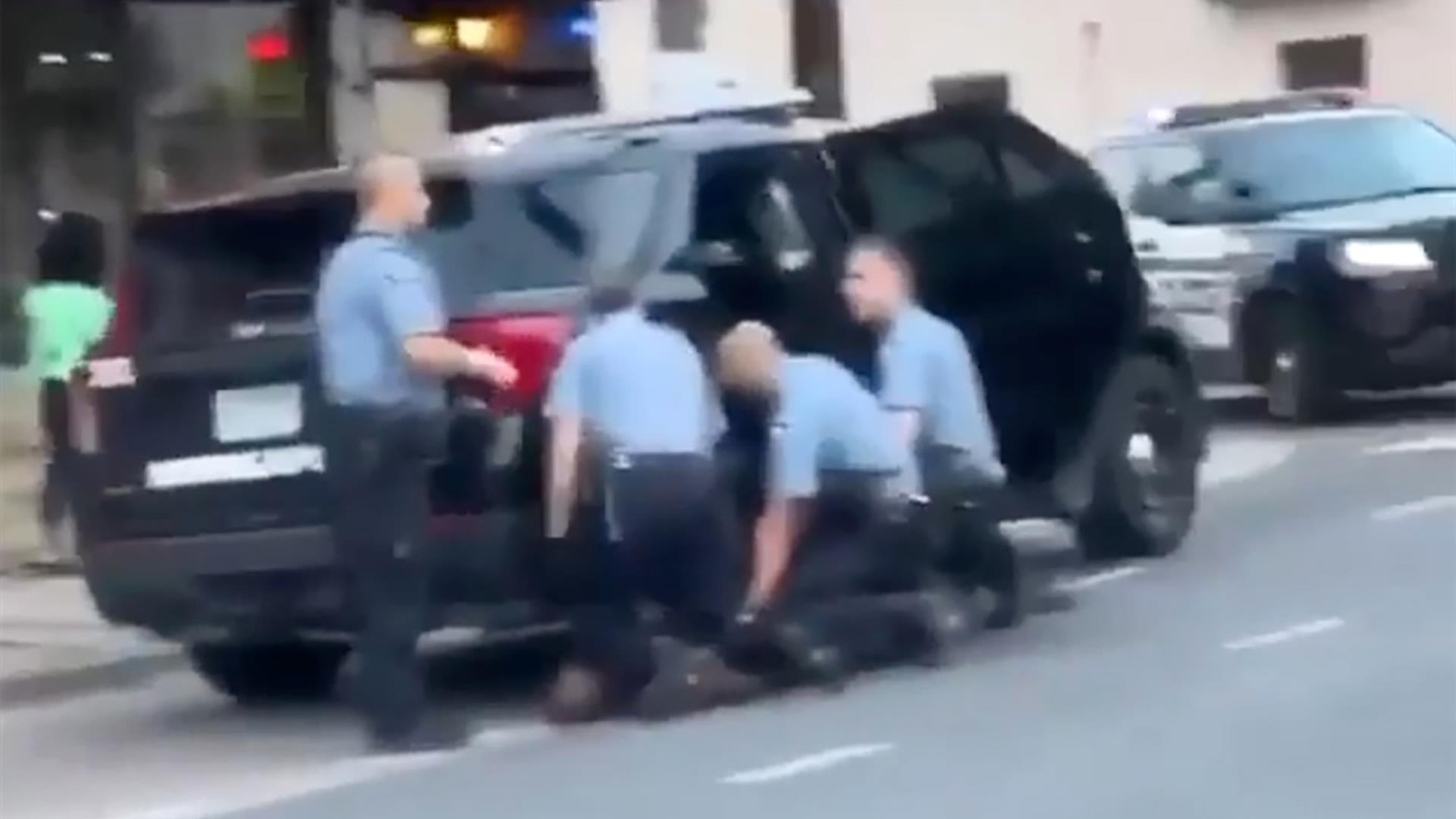
With protests sparked by the killing of George Floyd by Officer Derek Chauvin erupting all over the nation, states are beginning to ask the National Guard to step in. The epicenter of these demonstrations is Minneapolis, Minnesota, where the National Guard has already been deployed to handle protests and enforce the curfew.
The US military is monitoring protests in at least seven states, according to Defense Department documents obtained exclusively by The Nation.
In addition to Minnesota, where a Minneapolis police officer killed George Floyd, the military is tracking uprisings in New York, Ohio, Colorado, Arizona, Tennessee, and Kentucky, according to a Defense Department situation report. Notably, only Minnesota has requested National Guard support. The documents were originally stored on an unclassified server but were subsequently elevated to a classified system.
In the only state where the Guard has been deployed, troops have been given the green light to enforce the law at bullet-point, if needed.
Another document about the protests in Minnesota, titled “MNNG Civil Disturbance Response Storybook,” is also marked FOUO and is dated May 29. It states that National Guard members have been authorized for “weapon status red,” meaning magazines loaded but safety on.
The good news is the documents seen by Klippenstein express concern about the Guard’s response to civilian unrest. They emphasize the protection of human life and personal property. But we’ll have an opportunity to see where these two directives meet if more property is targeted by looters or protesters. The National Guard is a branch of the military and crowd control isn’t a directive it’s had a lot of practice exercising. The few times that it has, it hasn’t exactly been applauded for its restraint.
The National Guard is being inserted into a volatile situation with a shortage of equipment and possibly conflicting directives. This likely isn’t going to work out well. As Steven Aftergood points out in Klippenstein’s article, thrusting a military entity into a situation where there’s no clear enemy tends to lead to bad decision making.
They are not trying to defeat an adversary, but to support their fellow citizens, to preserve order and to protect the defenseless. And unlike a response to natural disaster, they have to act in an environment of intense anger and provocation without losing their own bearings. It’s a near-impossible task even with the best training and equipment.
The National Guard has already demonstrated its inability to handle things well in limited action. A video shot by a Minneapolis resident shows troops firing paint canisters onto the porch of a house — directly at the residents — for ignoring unlawful orders to go back inside. The curfew only says people cannot be in public places past a certain point in the evening. It does not say they need to remain indoors.
Also in today's criminal justice news, National Guard and Minneapolis PD officers illegally demand taxpayers stop filming from their porch and go inside ? you'll hear "Light 'em up!" as they then shoot at these people *WHO ARE ON THEIR OWN PORCH*
There also appears to be a great deal more surveillance happening. A Predator drone on loan from the CBP has been spotted flying over the city and the state’s government — momentarily and mistakenly — claimed the NSA was engaging in domestic surveillance.
Walz also reportedly said during a press conference that the National Security Agency was providing “intelligence support” and intercepted communications regarding riots.
“No NSA involvement,” a Walz spokesperson told CyberScoop. The Democratic governor was mistaken in suggesting Saturday during a press conference that the U.S. military had provided the state with signals intelligence collected by the NSA, the spokesperson said.
But that doesn’t mean there’s no domestic surveillance being performed by intelligence agencies. The Intelligence Community provides support to military intelligence and the National Guard is a military component. Governor Walz mentioned “signals interception,” which can mean a whole lot of things and it appears the governor is actively seeking access to DoD intelligence collections. The NSA’s involvement — if any — won’t be direct. But domestic-facing agencies — including the FBI — have access to NSA collections and can perform backdoor searches to access “inadvertent” collections of US persons’ communications.
With President Trump citing the Insurrection Act in tweets and public statements, there’s a possibility other branches of the military could become involved in crowd control and curfew enforcement. This Act was invoked during the 1992 LA riots but the law has been expanded twice since then to give the president even more discretionary power, meaning Trump can likely make good on his threat to send the troops in to shut down demonstrations if he feels cities and states aren’t doing enough on their own.
This unrest has erupted from the use of excessive force by an armed government employee. It seems unlikely that sending more armed government employees with a directive to deploy force will defuse the current situation — especially when defusing situations isn’t something that comes naturally to them.
The intersection of school administration and law enforcement leads directly to insanity. All logic goes out the window when school administrators come across something that makes them feel slightly uncomfortable. Adding cops to the mix doesn’t help anything. It only serves to turn every mildly misbehaving student into a criminal.
We’re here to talk about bombs. I’m sorry. Let me clarify. Not actual bombs. Drawings of bombs. Drawings created by students who are likely to draw bombs, guns, and general violent mayhem without actually wishing any of that on their fellow students.
It took a couple of rounds in court to actually set this right. We’ve covered similar insanity over drawings of bombs here at Techdirt before, like the (temporarily) indefinite suspension of an autistic student who drew a bomb that looked like something straight out of a Looney Tunes short.
This bomb drawing was a little more intricate but no more threatening than the round black bomb with a fuse we’ve all seen in any number of cartoons no one saw fit to prosecute. (h/t Ari Cohn)
The Wisconsin Court of Appeals has finally ended the madness that began with terroristic threat and disorderly conduct charges being leveled against a middle school student.
The decision [PDF] recounts the unfortunate chain of events that ultimately needed to be addressed by the penultimate level of the state’s criminal justice system.
The court found the following facts. In 2018, A.N.G. and T.B. were classmates in a middle school summer school program. During class one day, T.B. created a drawing on a page in his science workbook. T.B. did all the drawing and writing, but A.N.G. contributed ideas.
The drawing contained T.B. and A.N.G.’s names, images of what appears to be a cartoon-style bomb, a building labeled “school,” and a body lying on the ground. Around these images are written the following words: “pigs,” “preplay,” “bomb,” and “gun.” The court determined that the content of the drawing “conveys a threat of bodily harm.”
The Appeals Court points out something the lower court mentioned, but erroneously failed to give appropriate weight during its handling of the case.
However, as will be significant in analysis below, the court also specifically found that T.B. and A.N.G. did not intend for the drawing to be “for public consumption.” Instead, the court found, T.B. and A.N.G. intended to keep it “private.”
If it’s private, no one’s attempting to threaten others. That undercuts the charges brought against the student, which rely on communication of a threat. Instead, the court assumed even a private sharing of violent ideas between two students was enough to satisfy the charges because anything containing bombs and whatever would be viewed as “threatening” by interlopers the creators never intended to share their drawing with.
Returning to the circuit court’s decision, the court stated that it considered it “impossible,” “in the atmosphere in which we live,” that “a student would create a document like this and not assume a reasonable person would interpret” it as a “threat” that was “a serious expression of an intent to do harm.”
Wrong, says the Appeals Court. The surrounding circumstances matter. A person entertaining themselves by drawing depictions of violent dismemberment in their own home cannot be considered “threatening” to others in the legal sense because there’s no communication of these subjective “threats” to others. Just because a teacher saw it and decided to get involved doesn’t change the legal math.
However, as discussed below, this observation assumes an intended recipient of, or (using the term from First Amendment doctrine) “listener” to, the document, and in this case there was no intended recipient-listener.
The state’s arguments are nonsensical and the court gives them no sympathy.
The State argues that the drawing was a true threat because it was not created as part of a classroom assignment or a creative school-related expression. The State also contends that it was not mere hyperbole or an innocuous joke. Further, the State argues that the drawing was not reasonably intended to be kept private because it was reasonably foreseeable to A.N.G. that it would be seen in the school setting by school staff or other students who would interpret it as a serious expression of a purpose to inflict harm, and that, when it was discovered, school officials did reasonably interpret it this way.
The court says the state’s argument inverts First Amendment protections to strip them from anyone whose communications are inadvertently witnessed by others. An inadvertent discovery is not the same thing as a distributed communication originating from the now-unintended “sender.”
I see no reasonable way to construe the findings of the circuit court and the uncontested testimony at the hearing to reflect that A.N.G. meant to cause the drawing to come to the teacher’s attention, or to the attention of any other school staff or students other than T.B., its co-creator. Based on the circuit court’s findings and the uncontested evidence, the teacher’s awareness of the drawing and decision to demand it were just accidental from A.N.G.’s point of view.
There’s a criminal prosecution involved and yet the school’s actions — once the disturbing artwork had been inadvertently discovered — do not reflect the state’s assertions that administrators felt justifiably threatened by their discovery. If the school felt violence was imminent, it certainly didn’t act like it did.
[E]ven if I were to assume that school personnel could reasonably be classified as “listeners,” how these “listeners reacted to the” drawing (as Perkins refers to the first factor) does not weigh heavily towards classifying the drawing as a true threat. Based on the testimony of the teacher and administrators involved, the circuit court found that the drawing was “obviously concerning [to the school] and obviously the school took steps within the school setting to address these issues.” Yet, they did not take it so seriously that there was an evacuation or a search of the school. Further, instead of seeking to have A.N.G. removed from the school, administrators placed A.N.G. in an in-school suspension and did not impose more significant discipline. The assistant principal testified that she takes seriously all expressions that she construes to be threats, suggesting a low threshold for school reaction to any and all conduct that might represent a danger.
Constitutional rights for students may be limited but they’re not nonexistent.
Weighing all of the above considerations under the Perkins factors, I conclude that A.N.G.’s private drawing was not a true threat in the constitutional sense. Based on all of the circumstances, a reasonable “speaker” in A.N.G.’s position would not foresee that a reasonable “listener”—someone he never in fact envisioned—would interpret the drawing as a serious expression of a purpose to inflict harm. Case law interpreting the First Amendment protects from prosecution the expressions under the particular facts here.
Away goes the delinquency petition tied to two trumped-up charges that never fit the crime the student never committed. When you put kids, cops, school administrators, and a post-9/11 “everything is a threat” mentality in the same room, idiotic decisions get made and lawsuits get filed. A little bit of rational thinking would go a long way. Unfortunately for this student, it took two years for cooler heads to prevail.
Once again, the people that serve the public have failed to understand the public. Trying to turn citizens into narcs never works out as well as government agencies envision. The end result is almost always a useless waste of limited resources.
Eons ago when the coronavirus was still a concern, the mayor of New York City set up a snitch line for residents to report social distancing violations. Instead of hot neighbor-on-neighbor action, the city’s 311 line received a bunch of middle fingers, dick pics, and Hitler memes.
When Ohio’s government set up a snitch line for employers to report employees who were collecting unemployment instead of coming to their COVID-encrusted workplaces, an enterprising coder put together a script that clogged the tip bin with algorithmically-generated garbage.
Now that it’s civil unrest all over the place in response to the latest killing of a black person by a white police officer, the Dallas PD is asking citizens to step up… and report other citizens for exercising their First Amendment rights. It has not worked out well for the police, as Caroline Haskins reports for BuzzFeed.
In response to the tweeted request from Dallas Police, hundreds of K-pop fans replied with photos and videos of their favorite artists. Many people also claimed to have submitted videos of the police harming protesters, as well as fan edits of K-pop artists, to the iWatch Dallas app.
It took less than 12 hours for the public to run the iWatch Dallas snitch app into the ground. The app’s listings (for both Google Play and the iOS App Store) were flooded with one-star reviews while the Dallas PD was flooded with footage of foreign celebrities. It’s unclear whether the app was trolled to death or if the PD simply got tired of wading through K-pop footage to find recordings of, um… “perps” participating in First Amendment protected activities. Either way, the app is down and no further submissions are being accepted.
Who would win: a well-funded police department or a single account waving dollar bills at Twitter randos? (Since we already know the answer, I will be removing this question from the final exam.)
If you want citizens to contribute to your efforts, you might want to make sure you’re all working towards the same goal. Asking people to turn in other people for stuff most people don’t think other people should be turned in for is never going to work out well.
First off, I would like to thank Mike Masnick and Techdirt for publishing my post on the George Floyd killing and the (in my eyes) justifiable destruction of police property as an answer to years of injustice and “bad apple” excuses. Very few sites would have published such a post. Most would have rejected it after reading the title.
I also appreciate the commenters who weighed in, including those who disagreed with me. It was a strong stance for me to take and I expected to be drowned in criticism. That I wasn’t buried by critics perhaps demonstrates my points were well-made. Or it may just indicate the general public is sick and tired of cop bullshit — bullshit they far too often walk away from, thanks to generous union contracts, the almost-obligatory judicial application of qualified immunity, or the continued sheltering of police officers from personal responsibility by legislators.
But I did want to respond to one comment in the thread in particular. This comment suggested I was off-base and that peaceful protests are productive and have resulted in systemic changes. Despite the evidence I had laid down that being peaceful and seeking change through acceptable routes has been a net loss over the last 50+ years, a commenter suggested otherwise.
This is the central argument of the comment submitted by one of our many anonymous commenters. (Just a reminder, we love anonymous commenters and would never demand you give us all your vitals in exchange for your ability to comment on articles. We also allow you to turn ads off if you wish with no financial obligation. That being said, there are multiple ways to support this fiercely independent site, so click thru if you’d like to help. Thanks!)
In contrast to a number of the opinions I have been reading here and on other sites, I am not okay with burning everything down and I do not think that rioting and looting is going to result in any lasting change for the better. Taxpayer dollars were used to build that police station and purchase the police vehicles that got destroyed. A person’s life savings might be invested in that house or business that was set on fire. A corporate building (such as Target) might not be replaced in the future. (Black neighborhoods have been complaining of corporate chains avoiding them due to the higher costs incurred.) Yes, insurance might pay to replace the lost things. Yes, corporations and people might rebuild. However, what of the turmoil and hardship that occurs in ALL of the surrounding lives that have to find ways to cope without the services or shelter they previously had?
Rioting seems to only divide us into those who follow the rules of civil society and those who do not. I have read multiple accounts of people who came to peacefully protest, but LEFT when they realized things were going turn violent. They came to PROTEST violence, not PARTICIPATE in it. Martin Luther King Jr. and Mahatma Gandhi showed us that big changes CAN be be achieved without using violence. The PBS series “Eyes on the Prize” shows how the system in place tried multiple tactics and violence to derail the civil rights movement. Video clips of police violence were aired on TV. But the protesters did not fight back. They did not join in the violence. As those who wanted to maintain the status quo were forced to use stronger tactics against the protesters, the more it became obvious to the other members of society that something was seriously wrong and needed to be changed. The injustice was clear. Those who wanted justice then JOINED the protesters until those in power couldn’t ignore the injustice any further. Remember, our political representatives ONLY rule with the consent of the governed. When the governed rise up in unified agreement, change DOES happen.
I appreciate the point being made. Nonviolent protest can result in positive changes. Unfortunately, given the history of this nation and its law enforcement agencies, one cannot apply it to the current situation. The argument is coherent. But the effectiveness of holding back and operating within the confines of numerous social contracts has yet to prove a net gain for minorities — especially black Americans, who spent years as slaves and years as subhumans following the abolition of slavery.
Here’s Trevor Noah explaining eloquently why this flashpoint isn’t an overreaction to a single data point, but rather the culmination of hundreds of years of history.
That’s why this commenter’s argument doesn’t work. And here’s why the current situation — as horrendous and shocking as it seems — is more likely to move the dial on moving cops back into their rightful position as protectors and servants, rather than self-appointed warlords overseeing a mostly imaginary domestic conflict.
Several commenters said I was advocating for violence and destruction. They’re only half-right.
I don’t want looting and senseless violence either. In fact, I want no violence. I do not want police officers killed or injured. But if anyone should be targeted for destruction, it should be the entities that have perpetrated this violence upon certain Americans for years. Let them experience what it is to live as a black person in America — one now “led” by someone who openly calls for violence against those exercising their First Amendment rights (protesters, journalists).
I have already pointed out how peaceful protests have failed to effect change. These acts — the burning of precincts and police vehicles — may not either, but it will make the point far more effectively than hanging back and being compliant. I don’t want to see business owners victimized by opportunists but I think a few burning cop cars is a small price to pay for equality and serious police reform.
The law enforcement agencies of America have earned every bit of the hatred they’re now feeling. But during these protests all things are equal. There are no courts, no unions, no “tough-on-crime” legislators standing between cops and the destruction of their property. Sucks for them. And when the shit goes down, they flee their posts and give up any appearance of giving a damn about serving or protecting.
No one forced cops to behave this way. They took it upon themselves to act as warriors while performing a job that asks them to act as society’s protector. They talk a lot about the “thin blue line” between us and chaos, and then act as agents of chaos as soon as an opportunity presents itself. De-escalation tactics are an anomaly. Talking about the great sex you’ll have after offing a citizen is the norm.
There is no compelling reason for cops to change their standard M.O. And, granted, lighting the occasional cop car on fire will likely only solidify their misguided “warrior” mentality. But it does make it clear that the people still have power, even if the greater power — the US government that has treated minorities as lower classes for years — will ultimately prevail.
Then there’s the entire subclass of US citizens who spend their days bumper-stickering and forum-posting about how they and their guns will rise up against the government should it prove to be dangerous to American citizens and their rights. WHERE THE FUCK ARE THEY? Outside of a few Boogaloo contingents, the “Obama is coming for muh guns” crowd has remained silent and useless, presumably digging into their eight-year supply of dehydrated food until the government makes it safe for white people to walk around again. Fuck those guys. They suck as much as the government entities they claim to view as enemies. When the shit goes down, these motherfuckers start bunkering. Cowards.
The current situation is far from ideal. No one wants to live in a civil unrest hotspot, given the unpredictability of the situation. Governments all over the nation, however, are willing to make things worse — calling in an offshoot of the military best known for killing Vietnam War protesters. The war is at home, but the instigators are the people we’ve entrusted to protect society. They have continually proven they’re not up to the job. And they’ve made things worse by pretending every movement is furtive, every black man is probably armed, and every bit of cash in a someone’s wallet is probably drug money. They are road pirates, murderers, gang members, and charlatans. Let them feel the flames.
They have created their own personal hell. There should be no more free passes. This is the America they created. Whatever burns, burns. This is on their heads. No matter what any politician says in hopes of mollifying the voting public, the truth remains undeniable: you reap what you sow.
Keep your mitts off cellphones if you don’t have a warrant. That’s the message at least one court is sending to law enforcement. A 2014 decision by the US Supreme Court introduced a warrant requirement for cellphone searches. Since then, cops mostly seem to be complying with the mandate. Of course, this half-assed analysis of mine rests solely on federal cases I’ve managed to catch drifting downstream in the internet flotsam, so it’s far from conclusive. But — unlike the SCOTUS decision erecting a warrant requirement for historic cell site location info — there doesn’t seem to be much gray area in the Riley decision for law enforcement to explore.
But what exactly is a “search” in the Fourth Amendment/Riley context? It depends on which court you ask. The most straightforward reading of the Riley decision would be a warrant requirement for a search of a phone’s contents. But a couple of courts have read this decision even more narrowly. Riley doesn’t just cover full-fledged searches of device contents. It also covers more sneaky peeks of suspects’ phones.
In 2016, a federal court ruled that the FBI’s opening of a flip phone (roughly one week after the suspect’s arrest) violated the Fourth Amendment. Even the recognition that the home screen of a phone was subject to a “diminished” expectation of privacy couldn’t save the feds’ search. The court said the FBI’s search of the unexposed area of the phone — the closed screen — was a search and subject to Riley. To rule otherwise would be to allow the government to use similar cursory examinations to dodge the warrant requirement or unlawfully seek info to buttress affidavit claims in warrant requests for a more thorough search.
[T]he Court sees no reason to allow law enforcement to circumvent the warrant requirement in every case under the guise that they discovered evidence when they opened the phone or turned on the screen to turn the phone off.
A similar case has come to similar conclusions in a Washington federal court (via FourthAmendment.com). Flip phones may have been (mostly) resigned to the scrap heap of cellphone history, but the precedent — if not the emphasis — remains. Lock screens are still protected under the Fourth Amendment. From the decision [PDF]:
Here, the FBI physically intruded on Mr. Sam’s personal effect when the FBI powered on his phone to take a picture of the phone’s lock screen. See United States v. Jones, 565 U.S. 400, 410 (2012) (plurality opinion) (holding Government searched a car by attaching a GPS device to the car); Bond v. United States, 529 U.S. 334, 337 (2000) (concluding Border Patrol agent searched a bag by squeezing it); Arizona v. Hicks, 480 U.S. 321, 324–25 (1987) (holding officer searched stereo equipment by moving it so that the officer could view concealed serial numbers). The FBI therefore “searched” the phone within the meaning of the Fourth Amendment. See Jardines, 569 U.S. at 5. And because the FBI conducted the search without a warrant, the search was unconstitutional. See Vernonia Sch. Dist., 515 U.S. at 653.
This may have had something to do with the delay between the seizure and the search, which gave the FBI ample opportunity to ask for judicial approval for a search. Sam’s phone was seized by police officers on May 15, 2019. The FBI didn’t peek at the phone until nearly eight months later: February 13, 2020. As the court notes, the original seizure (and possible search) is completely separate from the FBI’s warrantless look months after the original seizure.
In their respective briefs, Mr. Sam and the Government treat the police’s and FBI’s examinations as legally indistinguishable. They are not. The police’s examination took place either incident to a lawful arrest or as part of the police’s efforts to inventory the personal effects found during Mr. Sam’s arrest. The FBI’s examination, by contrast, occurred long after the police had arrested Mr. Sam and inventoried his personal effects. Those examinations present significantly different legal issues…
The government tried to argue a lock screen contains no privacy interests. The court disagrees. Even though the information gleaned might be minimal (the FBI agent was likely looking to verify the phone was still in “airplane” mode), the expectation of privacy remains… as does the warrant requirement. It’s the intrusion that matters — not the government’s subjective beliefs about the contours of privacy protections.
The Government argues that the FBI did not need a warrant because Mr. Sam had no reasonable expectation of privacy in his phone’s lock screen. But that expectation is irrelevant. […]
[W]hen the Government gains evidence by physically intruding on a constitutionally protected area—as the FBI did here—it is “unnecessary to consider” whether the government also violated the defendant’s reasonable expectation of privacy.
The PD’s search — while more intrusive — remains in a gray area of law. The court isn’t confused. But the record is, making it impossible for the court to consider the Constitutional ramifications of the PD’s search of Sam’s phone. The department that took control of the seized phone did not clarify what it did to the phone or attempt to justify any actions it took by citing PD policy. Apparently an argument was raised that a lock screen peek was necessary to “inventory” the phone, but the PD submitted nothing that stated this step was normal or needed.
[T]he record does not show why the Tulalip Police Department felt it necessary to power on or manipulate Mr. Sam’s cell phone to properly inventory the phone. The record also does not show whether the Tulalip Police Department’s established procedures require its officers to power on every cell phone that they inventory. Indeed, the record does not even show whether the Tulalip Police Department searched Mr. Sam’s cell phone. Accordingly, the Court cannot resolve Mr. Sam’s motion to suppress as to the police’s examination of the phone.
But that only deals with the PD’s possible search of Sam’s phone. The FBI’s involvement is much clearer and more easily resolved. Powering up a phone to look at the lock screen is a search and requires a warrant. Even if the lock screen contains nothing more than a nickname (as this one did), it may still indicate ownership or possession which has evidentiary value in an investigation and prosecution. If the FBI wants to take a brief look at this information, it needs to get a warrant.
At least 20 journalists in Bangladesh have been charged or arrested under the controversial Digital Security Act (DSA) in the past month, raising concerns about free speech in the South Asian nation.
A number of journalists have been arrested for social media posts critical of the government or reporting on the government’s handling of the coronavirus pandemic.
This isn’t the only government handling the pandemic poorly. The response to the growing pandemic has ranged from bad to awful to well-we’re-done-reporting-stats around the world. But governments should welcome criticism. It keeps them honest. But world governments hate honesty. It shows they’re not prepared to handle nationwide outages. Unemployment rises. Markets fall. And governments… well, they censor.
At least one Bangladeshi journalist has already been “disappeared” by the government. Other journalists remain, but they’re overseen by a vindictive government that won’t take “this won’t do” for an answer. The government wants to hold those least responsible for the government’s failure responsible for the government’s failure. Cue the arrests and the attendant silencing.
Nearly 60 cases have been filed against more than 100 people, including 22 journalists, under the DSA this year until May 6, according to a study by Article 19, a UK-based human rights body.
Any charge will do. The disappeared journalist, Safiqul Islam Kajol, faces criminal defamation charges from the same government that whisked the reporter into nonexistence. Criminal defamation laws remain on the books solely for the purpose of allowing governments and their employees to harass and silence those who would speak out about their abuses.
In addition to the mysterious defamation charges, this same journalist faces “trespassing” charges for reappearing at the country’s border. Whatever it takes to pressure someone into a plea deal where they agree they’re guilty of being (1) existent and (2) critical of the government.
Make no mistake. The coronavirus is a crisis. And it’s an opportunity. Governments that think their constituents should be subjected to more surveillance are arguing this justifies that expansion of power. A worldwide patchwork of cybercrime/libel/fake news laws ensures this will happen, starting with prominent journalists and ending with internet nobodies who happen to question their government’s actions. The end result will be a wave of censorship — both self- and government-ordained.
There was a window of opportunity for cops following the George Floyd killing. Floyd, suspected of nothing more than passing a fake $20 bill, was killed by Officer Derek Chauvin of the Minneapolis PD. Chauvin placed his knee on Floyd’s neck until he was dead. This act lasted for nearly nine minutes — and for nearly three minutes after Chauvin checked for a pulse and found nothing. Yet he persisted, and none of the three cops around him stopped him.
Chauvin has been criminally charged and is under arrest. We’ll see where that takes us. But the opportunity was there for the rest of the nation’s cops to separate themselves from this “bad apple.” Cop defenders ignore what bad apples do to barrels, but we won’t. Chauvin is a symptom. He is not the disease.
As protests broke out around the nation, law enforcement agencies responded. While a small number attempted to find middle ground with aggrieved citizens, most acted as though they were a law unto themselves in these troubled times.
One site got it completely right — a site that so often offers up hot takes that it is the source of its own meme. Slate, of all places, nailed this call:
Also in today’s criminal justice news, police in Louisville KY – who just watched police in Minneapolis MN arrest a CNN reporter live on-air – say “hold my whiskey” and deliberately shoot a reporter and her cameraman
Photos taken by @PLBarghouty show HuffPost senior reporter Chris Mathias (@letsgomathias), with press badge clearly visible, being taken into custody by the NYPD. Chris was on assignment for HuffPost covering the protests in Brooklyn. pic.twitter.com/EWcWNoFjMW
“You are part of the problem, if not the entire problem.” – MPD officer
Minneapolis Police called our journalist the “entire problem” & threatened he “would get baked” as he filmed them at 31st & Blaisdell after curfew a block away from #GeorgeFloydProtests at the 5th Precinct. pic.twitter.com/K25MIapPcf
I just got hit by a rubber bullet near the bottom of my throat. I had just interviewed a man with my phone at 3rd and Pine and a police officer aimed and shot me in the throat, I saw the bullet bounce onto the street @LAist@kpcc OK, that’s one way to stop me, for a while pic.twitter.com/9C2u5KmscG
— Adolfo Guzman-Lopez (@AGuzmanLopez) June 1, 2020
This should come as no surprise. When the shit goes down, no rights will be respected. The Fourth tends to go first, but the First is often right behind it.
First, we had to deal with the coronavirus and government grabs for power. And this is where we are now: trying to limit a rational response to hundreds of years of racism, manifested as Officer Chauvin’s decision to place his knee on the neck of a black man until long after the man was dead.
The streets are filled with cameras. Cops control most of them. But they can’t control journalists. So, they seek to intimidate them by making it clear their presence isn’t welcomed. The current situation may heighten the response but it has been this way for years. Cops have made it clear — and they’ve been backed by the Commander-in-Chief — the press is the enemy. Journalists record things and those recordings usually make their way to many people — far more than the average internet rando could hope to rope in. If you can’t control the narrative, you can always attempt to control the journalists.
When chaos is on the menu, the cops can still try to maintain control of the reporting. And most of their sins will be forgiven because the situation was unforeseeable. But when it’s happening, we can see it. We can see what they do and how they react. And, because they react badly, every unblinking eye must be closed. The power must remain centralized, and if that means taking a few journalists out, so be it.
Clearview is currently being sued by the attorney general of Vermont for violating the privacy rights of the state’s residents. As the AG’s office pointed out in its lawsuit, users of social media services agree to many things when signing up, but the use of their photos and personal information as fodder for facial recognition software sold to government agencies and a variety of private companies isn’t one of them.
[T]he term “publicly available” does not have any meaning in the manner used by Clearview, as even though a photograph is being displayed on a certain social media website, it is being displayed subject to all of the rights and agreements associated with the website, the law, and reasonable expectations. One of those expectations was not that someone would amass an enormous facial-recognition-fueled surveillance database, as the idea that this would be, permitted in the United States was, until recently, unthinkable.
Thus, when an individual uploads a photograph to Facebook for “public” viewing, they consent to a human being looking at the photograph on Facebook. They are not consenting to the mass collection of those photographs by an automated process that will then put those photographs into a facial recognition database. Such a use violates the terms under which the consumer uploaded the photograph, which the consumer reasonably expects will be enforced.
This is somewhat the same point multiple companies have made with their (ultimately ineffective) cease-and-desist orders: we have not agreed to allow Clearview to harvest data from our sites and sell that collected data to others.
Whether or not selling this scraped collection to law enforcement agencies is unlawful in Vermont remains to be seen. But Clearview is fighting back in court, raising a truly questionable Section 230 defense against the AG’s lawsuit.
Clearview is represented by Tor Ekeland, who has been truly useful in defending people against bogus prosecutions. But Ekeland appears to believe Section 230 is a net loss for the public, so it’s interesting to see him raise it as a defense here.
Clearview’s motion to dismiss [PDF] compares Clearview to Google, claiming its bots crawl the web and cache images (and other data) on servers. However, Clearview claims it collects “far less data” than comparable search engines. According to its filing, Clearview does not collect any identifying info either — at least not intentionally. It only harvests photos and their metadata. The company says only 10% of the photos in its 4-billion photo database have any metadata attached.
However, this doesn’t mean the software can’t compile a staggering amount of information on a person and return this long list in response to an uploaded facial photo. To comply with California data privacy laws, Clearview has given state residents the opportunity to see what Clearview has gathered on them. It’s a lot.
The depth and variety of data that Clearview has gathered on me is staggering. My profile contains, for example, a story published about me in my alma mater’s alumni magazine from 2012, and a follow-up article published a year later.
It also includes a profile page from a Python coders’ meetup group that I had forgotten I belonged to, as well as a wide variety of posts from a personal blog my wife and I started just after getting married.
The profile contains the URL of my Facebook page, as well as the names of several people with connections to me, including my faculty advisor and a family member…
Clearview’s assertions about the personal information it intentionally gathers are meant to head off the Vermont AG’s claims that the company is violating state privacy laws. It’s also meant to portray Clearview as no more damaging to privacy than search engines like Google and no more nefarious than a Google search. The problem is cops are less likely to trust a Google search and more likely to trust a company that says it has 4 billion images and 600 law enforcement “partners,” even if the search results are equally questionable.
But on to the Section 230 argument, which is kind of amazing in its audacity.
Clearview is entitled to immunity under the CDA because: (1) Defendant is an interactive computer service provider or user; (2) Plaintiff’s claims are based on “information provided by another information content provider;” and (3) Plaintiff’s claims would treat Defendant as the “publisher or speaker” of such information.
These are the base claims. There’s more to it. But this is a company raising a defense afforded to service providers who host third party content. Here, there is no third party content — at least not in the sense that we’re used to. The “third parties” Clearview deals with are government agencies, who contribute no content of their own and only search the database of scraped photos using uploaded images.
In addition, the Vermont AG is not seeking an injunction against Clearview because of any particular content in its database. For example, the lawsuit is not predicated on defamatory content a user created. Instead, it’s suing Clearview because its method of database compilation ignores the state’s privacy laws. It’s hard to imagine how Section 230 fits this particular action, but this filing attempts to do exactly that.
First, Clearview asserts it’s a search engine just like Google. And if Google can’t be sued for violating privacy rights of users of other sites whose personal photos/information show up in Google searches, neither can Clearview.
The Attorney General seeks to prohibit Clearview from accessing or using publicly distributed photos, none of which Clearview AI created. Clearview AI’s republication of third-party content is the result of its search engine algorithm, which in this instance happens to be a biometric facial algorithm. The underlying technology does not transform Clearview into an information content provider that would be ineligible for CDA immunity. The CDA protects the publication of search engine results.
[…]
Clearview’s publication of its biometric facial algorithms results does not make it an information content provider any more than Google becomes one when it publishes its search algorithm results. Simply put, “[i]f a website displays content that is created entirely by third parties, … [it] is immune from claims predicated on that content.”
If Clearview did not create the content, it cannot be held responsible for its use of it — even if end users never specifically agreed to be part of a database accessible by law enforcement.
The motion also says Clearview cannot be viewed as a publisher, since all it has done is created (with scraped content) a searchable database of third-party content.
Vermont’s complaint cannot change the fact that it is targeting Clearview for performing the exact same functions as corporations like Google and Microsoft. Vermont claims that, “at a minimum, Clearview ‘must obtain the other party’s consent before’ using consumers’ photos from any website.” Google, in contrast, is said to “respect the Terms of Service of the websites they visit.” But Google searches are filled with information that individuals wanted to remain private, such as nonconsensually distributed intimate images. Nevertheless, Google has repeatedly been protected by §230 because courts have correctly viewed it as a publisher.
[…]
Clearview’s use of a complex algorithm does not negate the fact that it is performing the traditional role of a publisher. The Second Circuit emphatically rejected a claim that Facebook’s “matching” algorithm deprecated its status as a publisher. The Second Circuit has stated that, “we find no basis in the ordinary meaning of ‘publisher,’ the other text of Section 230, or decisions interpreting Section 230, for concluding that an interactive computer service is not the ‘publisher’ of third-party information when it uses tools such as algorithms that are designed to match that information with a consumer’s interests.”
The state has responded [PDF] to Clearview’s Section 230 assertions and has made the obvious point: this legal action isn’t being brought over content generated by third parties that would normally be met with immunity arguments. It’s being brought over Clearview’s acquisition and use of third-party content that state residents never agreed to being harvested/used by the facial recognition tech company.
The injurious information that Clearview claims gives it Section 230 immunity are the photographs that it screen-scraped. But the photographs themselves, as they were posted on the internet by their owners, are not injurious, and do not give rise to any of the State’s claims. Put another way, the State’s cause of action is not properly against millions of individuals who posted anodyne photographs on the internet.
The State’s claims are not based on the specific information at issue. The photographs themselves do not give rise to any of these claims. The State’s claims are for unfairness, deception, and fraudulent acquisition of data. Compl. ¶¶ 76-86. Specifically, Clearview’s conduct in acquiring the photographs through fraudulent means (see Section VI infra, discussing use of term “fraudulent”), storing them without proper security, applying facial recognition technology in a manner meant to violate privacy and infringe civil rights, and providing access to the database to whomever wanted it without concern for the safety or rights of the public, give rise to the State’s claims.
The state’s counter-argument hinges on a close reading of Section 230 — one that turns on a certain voluntary action by third parties.
Section 230 requires that the information at issue be provided by the third-party content provider. Again, the common thread in Section 230 cases is that the Information Content Provider posted the offensive information on the defendant’s servers. Here, no Vermont consumer could have intentionally provided any photographs to Clearview’s servers, because prior to the discovery in January of this year that Clearview had 3 billion photographs in a New York Times exposé, the general public did not know that Clearview existed.
It also points out how Clearview differs from the search engines it tries to compare itself to favorably.
Clearview is not a search engine like Google or Bing. Clearview’s App does something that no other company operating in the United States, including search engine companies, has ever done. In fact, search engine companies that are capable of creating a product like Clearview’s refused to do so for ethical reasons.
The state isn’t impressed by Clearview’s arguments and sums everything up with this:
For the fact pattern to apply, the photographs themselves would have to somehow be unfair or deceptive and the State’s claims would more properly be brought against the individuals.
In essence, the lawsuit isn’t about objectionable content hosted by Clearview, but objectionable actions by Clearview itself. That’s why Section 230 doesn’t apply. I’m not sure how the local court will read this, but it would seem readily apparent that Section 230 does not immunize Clearview in this case.
(Those of you who’d like to read a transcript, rather than watch this powerful performance by Orlando Jones [possibly for “Dear God, I’m still at work” reasons], can do so here.)
This is the history of black Americans. For a few hundred years, they weren’t even Americans. And even after that — even after the Civil War — black Americans spent a hundred years being shunted to different schools, different neighborhoods, different restrooms, different bus seating, different water fountains. They are not us, this land of opportunity repeatedly stated.
Integration was forced. It was rarely welcomed. Being black still means being an outsider. Four hundred years of subjugation doesn’t just end. This is how the story continues:
A hundred years later. You’re fucked. A hundred years after that. Fucked. A hundred years after you get free, you still getting fucked out a job and shot at by police.
Fucked.
That’s George Floyd. The Minneapolis resident allegedly passed a counterfeit $20 bill at a local store. The penalty was death — delivered extrajudicially by Minneapolis police officer Derek Chauvin. Officer Chauvin put his knee on the neck of the handcuffed Floyd for 8 minutes and 46 seconds. This continued for more than two minutes after Officer Chauvin had checked Floyd’s pulse and stated he “couldn’t find one.”
A man was dead under Chauvin’s knee and yet he never moved. No one around him moved either. The other three officers at the scene watched Officer Chauvin kill a man, and not a single one of them did anything to prevent this from happening.
The good news is they’ve all been fired. The other news — with the “good” excised — is Officer Chauvin is being criminally charged. That’s only news. Buy your insurance now because it’s almost guaranteed Minneapolis will burn again once a jury has had a shot at this thing.
First, there’s the murder charge. We all want this but there’s little that supports it. It looks like murder, but the state has to prove things it’s probably not going to be able to prove — especially when the people doing the prosecuting aren’t all that interested in prosecuting cops.
Third-degree murder is the most minimal of murder charges and even that might not be enough to drag Officer Chauvin into the crushing wheels of the carceral state. As Scott Greenfield explains, there doesn’t appear to be enough to justify this charge in what’s been seen in multiple videos. It appears Chauvin deployed a restraint technique that’s been given a thumbs up by multiple law enforcement agencies.
Former police officer Derek Chauvin was charged with Murder 3, a not-insignificant charge even if it lacks the panache of Murder 1, with a potential sentence of 25 years in prison. Unlike intentional murder, the mens rea under Minnesota Statutes § 609.195 requires only a “depraved mind.”
609.195 MURDER IN THE THIRD DEGREE.
(a) Whoever, without intent to effect the death of any person, causes the death of another by perpetrating an act eminently dangerous to others and evincing a depraved mind, without regard for human life, is guilty of murder in the third degree and may be sentenced to imprisonment for not more than 25 years.
Yet, the complaint filed by the Hennepin County Attorney made almost no effort to assert that the elements of the charge were met, that Chauvin was “perpetrating an act eminently dangerous to others and evincing a depraved mind, without regard for human life.”
While the video clearly showed Chauvin’s knee on Floyd’s neck, which was naturally assumed, for obvious reasons, to have been the cause of death, that alone does not suffice to meet the element that it was an “act eminently dangerous.” It’s hardly an undangerous immobilization technique, but it’s also not an uncommon restraint, and is a permissible use of force in Minneapolis. That it’s only supposed to be used to restrain someone actively resisting gives rise to a departmental violation, but doesn’t elevate a lawful use of force to an eminently dangerous act.
If that falls, we’re left with manslaughter. And that probably won’t be enough to convince anyone Chauvin has been punished enough for continuing to use his knee to “restrain” Floyd for almost three minutes after a cop couldn’t detect his pulse.
“I am worried about excited delirium or whatever,” Lane said.
From that, we run into the details of the coroner’s report. These are preliminary, so they will change. But the exonerative text is already in there, ready for deployment by tough-on-crime politicians, media personnel willing to act like PD stenographers, police union officials (and the police union in Minneapolis is one of the worst), and anyone else seeking to justify Chauvin’s actions.
George Floyd didn’t die because Officer Chauvin crushed Floyd’s neck with his knee for almost nine minutes — most of which were spent with Floyd stating he couldn’t breathe. He died because he was going to die, with or without Officer Chauvin’s intercession.
The autopsy revealed no physical findings that support a diagnosis of traumatic asphyxia or strangulation. Mr. Floyd had underlying health conditions including coronary artery disease and hypertensive heart disease. The combined effects of Mr. Floyd being restrained by the police, his underlying health conditions and any potential intoxicants in his system likely contributed to his death.
George Floyd died of heart disease, you guys. It coincidentally killed him while he was having his neck compressed by a cop who checked his pulse and discovered he was likely already dead and continued to compress his neck for another two minutes. Also peep the “potential intoxicants,” which probably gave George Floyd the superhuman strength he needed to stay alive for seven of those nine minutes before succumbing to “coronary artery disease.”
If Chauvin walks, Minneapolis burns again. Multiple cities burn. Unlike other killings of black men by cops, this has prompted intense protests across the nation. This one — committed in full view of multiple phones and at least one nearby CCTV camera — shows cops do not give a fuck who is watching. They will do what they want to do and roll the dice on a favorable ruling by federal courts.
LET IT BURN. LET IT ALL BURN.
In response to this killing, Minneapolis burned. Looting accompanied the protests, as is often the case. We can argue about the positive/negative effects of looting for as long as you want in the comment threads, but let’s take a look at a couple of facts.
We have had riots in America for years. And looting. Those arguing that the destruction of businesses during these protests is counterproductive need to have their memories refreshed. This nation began with the looting of British ships. A whole offshoot of the “rule of law” party (also the “free speech” party, which is currently headed by someone seeking to directly regulate social media platforms) named itself after protesters who boarded British ships and threw their merchandise overboard.
Even if you decry the the destruction of local businesses which may not have the funds to recover from this unexpected turn of events, you cannot argue with protesters going straight to the source of the problem.
Police precinct set on fire on the third day of demonstrations as the so-called Twin Cities of Minneapolis and St. Paul seethed over the shocking police killing of a handcuffed black man
And, as a bonus, the thin blue line between us and chaos being filmed abandoning their posts and leaving us to the chaos they could never protect us from, no matter how many black men they killed.
This is the moment Minneapolis police abandoned, fled the police precinct during the protests for #JusticeForGeorge – minutes later the precinct went up in flames pic.twitter.com/thYDXBThLe
The cops fucked this up. The cops should pay. Unfortunately, it will be taxpayers funding the rebuilding of the Third Precinct station in Minneapolis, but, by all means, burn every cop car, precinct, etc. that stands between black Americans and the respect of their rights.
The message is clear: cops are the problem, not the solution. Burn the shit that means something to them — the stuff that protects them from the people — and see where we all are at the end of the day.
Let’s take the long view. What has this accomplished? Here’s a list of riots sparked by police violence against minorities — one dating back nearly 60 years.
1965: Los Angeles 1967: Newark 1967: Detroit 1968: King assassination 1980: Miami 1992: Los Angeles 2001: Cincinnati 2014: Ferguson 2015: Baltimore 2016: Charlotte
What did that get us? Burning small parts of the system to the ground got us Nixon (who ran on a “tough on crime” platform following the riots in the 1960s) and a immensely-harmful drug war that has done nothing to slow the supply of drugs but has done everything to improve the bottom lines of PDs and prosecutors.
Cops haven’t changed. And they haven’t changed despite having every reason to. Several dozen cop shops are operating under consent decrees with the Department of Justice because they can’t be trusted to not violate rights en masse on their own. The rest are still acting like it’s a war zone out there, cladding themselves in cast-off military gear and equipment even as crime rates remain at historic lows. It’s tough to be a cop out there, say cops, even as unimpeachable data says otherwise to a bunch of impeachable cops.
But let’s just say you’re arguing that riots/protests/looting don’t solve anything. Let’s look at the data again. Here are the years where nothing happened:
Did not attacking cops help then? Did leaving retail outlets intact make policing better? Did a lack of looting force cops to realize their systemic bias was hurting communities? Did all of this non-action bring us to a better place in terms of our relationship with law enforcement? (Those of you who are not minorities can put your hands down. Thanks.)
Short answer: it did not. The boot stamping on a human face forever is the past, present, and future. This image was personified by Officer Chauvin, who placed his knee on the neck of a human being suspected of passing a counterfeit $20 bill until he died. And continued to perform this inadvertently symbolic move for nearly another three minutes after that.
If it’s going to burn — and it should — it should start with those who have earned the flames. Cop cars are burning. Police stations are burning. Good. There is nothing wrong with this. The cops pretended to fear us whenever it was convenient. They claimed their subjective fear that someone might have a weapon justified every bullet they pumped into a person. Then they did nothing when people carrying actual guns marched on government buildings to demand access to restaurants and haircuts.
Fuck them. If you’re going to cry about the threats separating you from making it home to your family every night, at least be consistent. And if you can’t be consistent, at least restrain yourself from killing non-resistant people in the street in front of several cameras. And for fuck’s sake, if you can’t do that last part, it just means you don’t fear the public and their representatives. It means you think the courts will clear you, if not your own department and union. No public official deserves this much deference, trust, or unearned protection.
YOU OWE US.
That obligation has never changed. The only thing that has changed is the other branches of the government, which have decided — either through QI rulings or deference to police unions — that the public matters less than those sworn to serve it.
This is not me wading into a recent controversy with my eye on harvesting clicks. This is me — and this site — covering the abuses perpetrated by law enforcement agencies for years. There is nothing anomalous about this event. It just shows accountability can’t be brought solely by the mute witnesses of criminal acts by law enforcement officers. We have our cameras pointed at them. They have their own cameras. And yet, they still don’t care.
If this is how they want it, we have the power to give it to them.
Be the god of righteous hellfire. All these years of not setting fire to the possessions of an invading force intent on treating fellow citizens as enemy combatants has done nothing.
The only news network further to the right than Fox News has just seen its baseless libel lawsuit against MSNBC host Rachel Maddow dismissed under California’s anti-SLAPP law. While Fox occasionally has to acknowledge the real world and employs a few newscasters critical of the President and his policies, One American News Network (OAN/OANN) apparently feels no compunction to address any issues honestly, preferring to curl up in the lap of the leader of the free world.
OAN sued after Maddow offered her commentary on a Daily Beast article that said the news network employed a “Kremlin-paid journalist.” The journalist, Kristian Rouz, had been working for both OAN and the Kremlin-owned Sputnik, the latter of which was determined to be a participant in Russia’s 2016 election interference effort.
Maddow’s commentary was somewhat hyperbolic, and very critical of OAN and its double-agent journalist. But OAN took particular issue with a single phrase Maddow said during her broadcast. From the decision [PDF]:
Maddow states, “there is a lot of news today, but among the giblets the news gods dropped off their plates for us to eat off the floor today, is the actual news that this super right-wing news outlet that the President has repeatedly endorsed . . . we literally learned today that that outlet the President is promoting shares staff with the Kremlin. I mean, what?” She laughs and soon after says, “in this case, the most obsequiously pro-Trump right wing news outlet in America really literally is paid Russian propaganda. Their on-air U.S. politics reporter is paid by the Russian government to produce propaganda for that government.” (emphasis added). The underlined portion of the sentence highlights where Plaintiff takes issue.
MSNBC filed an anti-SLAPP motion to strike the suit, pointing out OAN’s effort was just an attempt to stifle Constitutionally protected speech. Anti-SLAPP laws allow for fee-shifting, which makes it riskier for plaintiffs to pursue bogus lawsuits. But it also shifts some of the burden of proof to the defendants, who must show the targeted speech is actually protected.
First, the court points out that Maddow’s MSNBC segment isn’t the straightforward readings of newsworthy happenings. It is very much slanted towards opinion, which Maddow offers liberally (in both senses of the word). Since viewers know what to expect from Maddow, it’s unlikely they would take all of her commentary to be factual assertions.
Maddow does not keep her political views a secret, and therefore, audiences could expect her to use subjective language that comports with her political opinions. Thus, Maddow’s show is different than a typical news segment where anchors inform viewers about the daily news. The point of Maddow’s show is for her to provide the news but also to offer her opinions as to that news. Therefore, the Court finds that the medium of the alleged defamatory statement makes it more likely that a reasonable viewer would not conclude that the contested statement implies an assertion of objective fact.
There’s also the context in which her statements were delivered, which includes her demeanor during the broadcast.
The “general tenor” of Maddow’s segment is a report on the Daily Beast article, and Maddow’s tone could be described as surprise and glee at the unexpectedness of the story. She begins by calling the story the “single most like sparkly story” in what had been “a more ridiculous than most day in the news.” She calls the news one among “the giblets the news gods dropped off their plates for us to eat off the floor today.” Maddow reports that OAN shares staff with the Kremlin and discusses the allegedly defamatory Russia connection, then follows this by saying (while laughing), “I mean, what?” She concludes the segment by saying, with a shake of the head, “I mean, this is the kind of news we are supposed to take in stride these days. And we do our best.”
As the court sees it, Maddow’s piece accurately described the contents of the Daily Beast article, interspersed with her colorful interjections. Most of her coverage of OAN’s Sputnik-employed journalist was “opinion and exaggeration.” This includes the single sentence OAN sued over.
The court also points out the word “literally” no longer holds a single meaning, so relying on this word doesn’t move OAN any closer to establishing its defamation claim.
Although Maddow used the word “literally,” this does not necessarily mean the phrase should be taken to be factual. Nowadays, as evidenced by the two conflicting definitions of the word “literally,” use of the word can be hyperbolic.
Even if “literally” were to be taken literally, it still wouldn’t help OAN. The facts relayed by Maddow in her piece are indisputable. By that I mean OAN doesn’t even dispute them. And as for Maddow’s connection of OAN to Russian propaganda efforts, this was supported by her clarification and evidence from an outside source.
There is no dispute that Maddow discussed this article on her segment and accurately presented the article’s information. Indeed, the facts in the title of her segment are not alleged to be defamatory: “Staffer on Trump-favored network is on propaganda Kremlin payroll.” Plaintiff agrees that President Trump has praised OAN, and Rouz, a staffer for OAN, writes articles for Sputnik News which is affiliated with the Russian government. (See Compl. ¶ 24.) Rouz is paid for his work by Sputnik News. (Id. ¶ 26.) Maddow provided these facts in her segment before making the allegedly defamatory statement.
[…]
Further, in the sentence immediately following the contested sentence that OAN is “literally paid Russia propaganda,” Maddow said, almost as a clarification, that OAN’s “on-air U.S. politics reporter is paid by the Russian government to produce propaganda for that government.” And, at the time Maddow made the allegedly defamatory statement, the screen was showing the Daily Beast article accompanied by the text: “One of the on-air reporters at the 24-hour network is a Russian national on the payroll of the Kremlin’s official propaganda outlet, Sputnik.” Thus, Maddow immediately qualified the allegedly defamatory statement with a factual clarification and viewers were seeing accurate information regarding OAN on the screen while listening to Maddow.
That ends OAN’s lawsuit. And the court will not give OAN another chance to engage in this dumbassery again.
Because there is no set of facts that could support a claim for defamation based on Maddow’s statement, the complaint is dismissed with prejudice.
With that, OAN is now on the hook for Maddow’s legal fees, thanks to California’s anti-SLAPP law. It’s that simple. And it should be that way everywhere, which would head off the libel tourism we see on display in a handful of states. Giving defendants an early exit keeps them from being bled to death, and plaintiffs, who’ve had to pay their opponents’ legal fees, will be less likely to use the federal court system vindictively to silence critics.