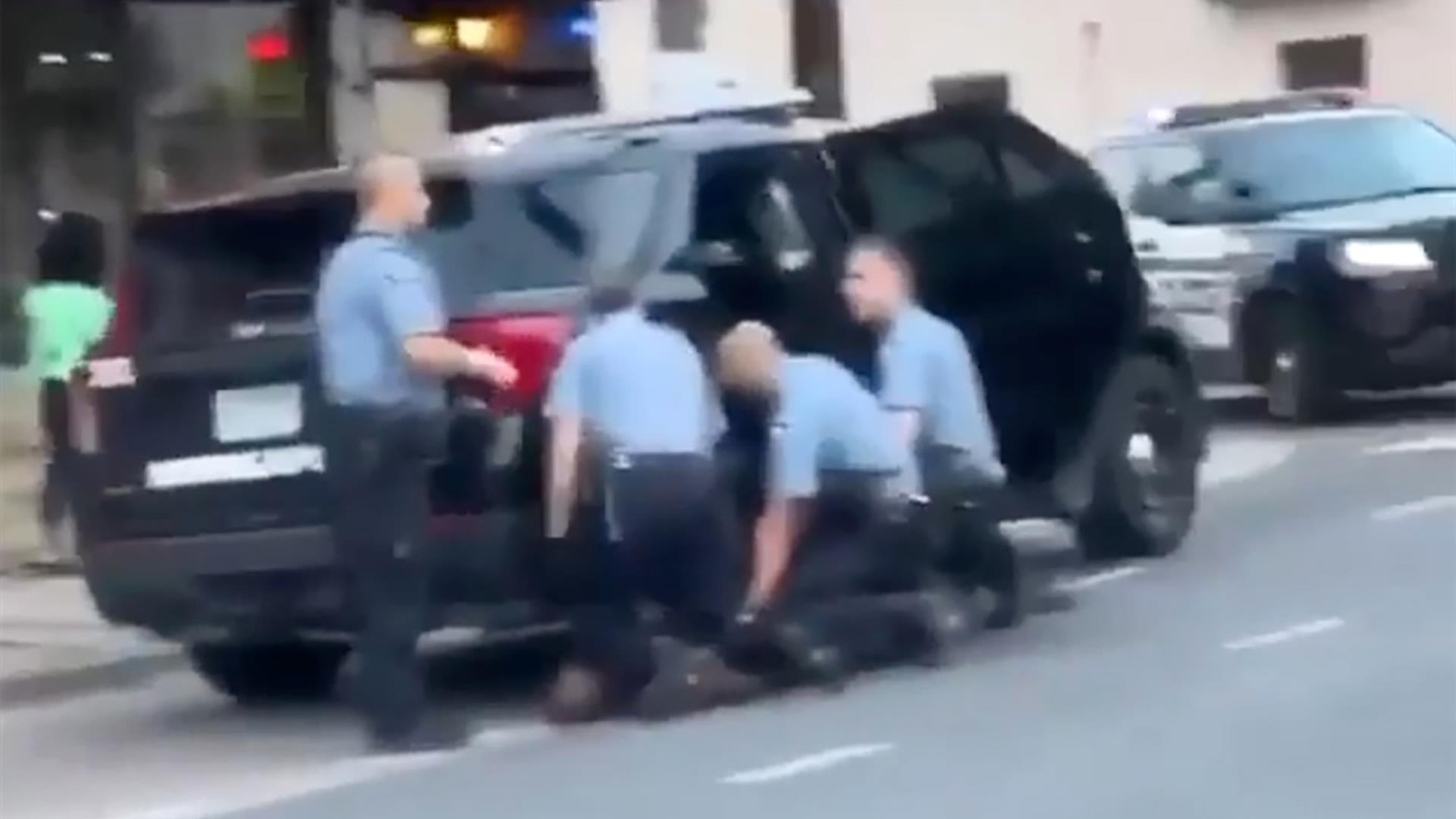
There was a window of opportunity for cops following the George Floyd killing. Floyd, suspected of nothing more than passing a fake $20 bill, was killed by Officer Derek Chauvin of the Minneapolis PD. Chauvin placed his knee on Floyd’s neck until he was dead. This act lasted for nearly nine minutes — and for nearly three minutes after Chauvin checked for a pulse and found nothing. Yet he persisted, and none of the three cops around him stopped him.
Chauvin has been criminally charged and is under arrest. We’ll see where that takes us. But the opportunity was there for the rest of the nation’s cops to separate themselves from this “bad apple.” Cop defenders ignore what bad apples do to barrels, but we won’t. Chauvin is a symptom. He is not the disease.
As protests broke out around the nation, law enforcement agencies responded. While a small number attempted to find middle ground with aggrieved citizens, most acted as though they were a law unto themselves in these troubled times.
One site got it completely right — a site that so often offers up hot takes that it is the source of its own meme. Slate, of all places, nailed this call:
Also in today’s criminal justice news, police in Louisville KY – who just watched police in Minneapolis MN arrest a CNN reporter live on-air – say “hold my whiskey” and deliberately shoot a reporter and her cameraman
Photos taken by @PLBarghouty show HuffPost senior reporter Chris Mathias (@letsgomathias), with press badge clearly visible, being taken into custody by the NYPD. Chris was on assignment for HuffPost covering the protests in Brooklyn. pic.twitter.com/EWcWNoFjMW
“You are part of the problem, if not the entire problem.” – MPD officer
Minneapolis Police called our journalist the “entire problem” & threatened he “would get baked” as he filmed them at 31st & Blaisdell after curfew a block away from #GeorgeFloydProtests at the 5th Precinct. pic.twitter.com/K25MIapPcf
I just got hit by a rubber bullet near the bottom of my throat. I had just interviewed a man with my phone at 3rd and Pine and a police officer aimed and shot me in the throat, I saw the bullet bounce onto the street @LAist@kpcc OK, that’s one way to stop me, for a while pic.twitter.com/9C2u5KmscG
— Adolfo Guzman-Lopez (@AGuzmanLopez) June 1, 2020
This should come as no surprise. When the shit goes down, no rights will be respected. The Fourth tends to go first, but the First is often right behind it.
First, we had to deal with the coronavirus and government grabs for power. And this is where we are now: trying to limit a rational response to hundreds of years of racism, manifested as Officer Chauvin’s decision to place his knee on the neck of a black man until long after the man was dead.
The streets are filled with cameras. Cops control most of them. But they can’t control journalists. So, they seek to intimidate them by making it clear their presence isn’t welcomed. The current situation may heighten the response but it has been this way for years. Cops have made it clear — and they’ve been backed by the Commander-in-Chief — the press is the enemy. Journalists record things and those recordings usually make their way to many people — far more than the average internet rando could hope to rope in. If you can’t control the narrative, you can always attempt to control the journalists.
When chaos is on the menu, the cops can still try to maintain control of the reporting. And most of their sins will be forgiven because the situation was unforeseeable. But when it’s happening, we can see it. We can see what they do and how they react. And, because they react badly, every unblinking eye must be closed. The power must remain centralized, and if that means taking a few journalists out, so be it.
(Those of you who’d like to read a transcript, rather than watch this powerful performance by Orlando Jones [possibly for “Dear God, I’m still at work” reasons], can do so here.)
This is the history of black Americans. For a few hundred years, they weren’t even Americans. And even after that — even after the Civil War — black Americans spent a hundred years being shunted to different schools, different neighborhoods, different restrooms, different bus seating, different water fountains. They are not us, this land of opportunity repeatedly stated.
Integration was forced. It was rarely welcomed. Being black still means being an outsider. Four hundred years of subjugation doesn’t just end. This is how the story continues:
A hundred years later. You’re fucked. A hundred years after that. Fucked. A hundred years after you get free, you still getting fucked out a job and shot at by police.
Fucked.
That’s George Floyd. The Minneapolis resident allegedly passed a counterfeit $20 bill at a local store. The penalty was death — delivered extrajudicially by Minneapolis police officer Derek Chauvin. Officer Chauvin put his knee on the neck of the handcuffed Floyd for 8 minutes and 46 seconds. This continued for more than two minutes after Officer Chauvin had checked Floyd’s pulse and stated he “couldn’t find one.”
A man was dead under Chauvin’s knee and yet he never moved. No one around him moved either. The other three officers at the scene watched Officer Chauvin kill a man, and not a single one of them did anything to prevent this from happening.
The good news is they’ve all been fired. The other news — with the “good” excised — is Officer Chauvin is being criminally charged. That’s only news. Buy your insurance now because it’s almost guaranteed Minneapolis will burn again once a jury has had a shot at this thing.
First, there’s the murder charge. We all want this but there’s little that supports it. It looks like murder, but the state has to prove things it’s probably not going to be able to prove — especially when the people doing the prosecuting aren’t all that interested in prosecuting cops.
Third-degree murder is the most minimal of murder charges and even that might not be enough to drag Officer Chauvin into the crushing wheels of the carceral state. As Scott Greenfield explains, there doesn’t appear to be enough to justify this charge in what’s been seen in multiple videos. It appears Chauvin deployed a restraint technique that’s been given a thumbs up by multiple law enforcement agencies.
Former police officer Derek Chauvin was charged with Murder 3, a not-insignificant charge even if it lacks the panache of Murder 1, with a potential sentence of 25 years in prison. Unlike intentional murder, the mens rea under Minnesota Statutes § 609.195 requires only a “depraved mind.”
609.195 MURDER IN THE THIRD DEGREE.
(a) Whoever, without intent to effect the death of any person, causes the death of another by perpetrating an act eminently dangerous to others and evincing a depraved mind, without regard for human life, is guilty of murder in the third degree and may be sentenced to imprisonment for not more than 25 years.
Yet, the complaint filed by the Hennepin County Attorney made almost no effort to assert that the elements of the charge were met, that Chauvin was “perpetrating an act eminently dangerous to others and evincing a depraved mind, without regard for human life.”
While the video clearly showed Chauvin’s knee on Floyd’s neck, which was naturally assumed, for obvious reasons, to have been the cause of death, that alone does not suffice to meet the element that it was an “act eminently dangerous.” It’s hardly an undangerous immobilization technique, but it’s also not an uncommon restraint, and is a permissible use of force in Minneapolis. That it’s only supposed to be used to restrain someone actively resisting gives rise to a departmental violation, but doesn’t elevate a lawful use of force to an eminently dangerous act.
If that falls, we’re left with manslaughter. And that probably won’t be enough to convince anyone Chauvin has been punished enough for continuing to use his knee to “restrain” Floyd for almost three minutes after a cop couldn’t detect his pulse.
“I am worried about excited delirium or whatever,” Lane said.
From that, we run into the details of the coroner’s report. These are preliminary, so they will change. But the exonerative text is already in there, ready for deployment by tough-on-crime politicians, media personnel willing to act like PD stenographers, police union officials (and the police union in Minneapolis is one of the worst), and anyone else seeking to justify Chauvin’s actions.
George Floyd didn’t die because Officer Chauvin crushed Floyd’s neck with his knee for almost nine minutes — most of which were spent with Floyd stating he couldn’t breathe. He died because he was going to die, with or without Officer Chauvin’s intercession.
The autopsy revealed no physical findings that support a diagnosis of traumatic asphyxia or strangulation. Mr. Floyd had underlying health conditions including coronary artery disease and hypertensive heart disease. The combined effects of Mr. Floyd being restrained by the police, his underlying health conditions and any potential intoxicants in his system likely contributed to his death.
George Floyd died of heart disease, you guys. It coincidentally killed him while he was having his neck compressed by a cop who checked his pulse and discovered he was likely already dead and continued to compress his neck for another two minutes. Also peep the “potential intoxicants,” which probably gave George Floyd the superhuman strength he needed to stay alive for seven of those nine minutes before succumbing to “coronary artery disease.”
If Chauvin walks, Minneapolis burns again. Multiple cities burn. Unlike other killings of black men by cops, this has prompted intense protests across the nation. This one — committed in full view of multiple phones and at least one nearby CCTV camera — shows cops do not give a fuck who is watching. They will do what they want to do and roll the dice on a favorable ruling by federal courts.
LET IT BURN. LET IT ALL BURN.
In response to this killing, Minneapolis burned. Looting accompanied the protests, as is often the case. We can argue about the positive/negative effects of looting for as long as you want in the comment threads, but let’s take a look at a couple of facts.
We have had riots in America for years. And looting. Those arguing that the destruction of businesses during these protests is counterproductive need to have their memories refreshed. This nation began with the looting of British ships. A whole offshoot of the “rule of law” party (also the “free speech” party, which is currently headed by someone seeking to directly regulate social media platforms) named itself after protesters who boarded British ships and threw their merchandise overboard.
Even if you decry the the destruction of local businesses which may not have the funds to recover from this unexpected turn of events, you cannot argue with protesters going straight to the source of the problem.
Police precinct set on fire on the third day of demonstrations as the so-called Twin Cities of Minneapolis and St. Paul seethed over the shocking police killing of a handcuffed black man
And, as a bonus, the thin blue line between us and chaos being filmed abandoning their posts and leaving us to the chaos they could never protect us from, no matter how many black men they killed.
This is the moment Minneapolis police abandoned, fled the police precinct during the protests for #JusticeForGeorge – minutes later the precinct went up in flames pic.twitter.com/thYDXBThLe
The cops fucked this up. The cops should pay. Unfortunately, it will be taxpayers funding the rebuilding of the Third Precinct station in Minneapolis, but, by all means, burn every cop car, precinct, etc. that stands between black Americans and the respect of their rights.
The message is clear: cops are the problem, not the solution. Burn the shit that means something to them — the stuff that protects them from the people — and see where we all are at the end of the day.
Let’s take the long view. What has this accomplished? Here’s a list of riots sparked by police violence against minorities — one dating back nearly 60 years.
1965: Los Angeles 1967: Newark 1967: Detroit 1968: King assassination 1980: Miami 1992: Los Angeles 2001: Cincinnati 2014: Ferguson 2015: Baltimore 2016: Charlotte
What did that get us? Burning small parts of the system to the ground got us Nixon (who ran on a “tough on crime” platform following the riots in the 1960s) and a immensely-harmful drug war that has done nothing to slow the supply of drugs but has done everything to improve the bottom lines of PDs and prosecutors.
Cops haven’t changed. And they haven’t changed despite having every reason to. Several dozen cop shops are operating under consent decrees with the Department of Justice because they can’t be trusted to not violate rights en masse on their own. The rest are still acting like it’s a war zone out there, cladding themselves in cast-off military gear and equipment even as crime rates remain at historic lows. It’s tough to be a cop out there, say cops, even as unimpeachable data says otherwise to a bunch of impeachable cops.
But let’s just say you’re arguing that riots/protests/looting don’t solve anything. Let’s look at the data again. Here are the years where nothing happened:
Did not attacking cops help then? Did leaving retail outlets intact make policing better? Did a lack of looting force cops to realize their systemic bias was hurting communities? Did all of this non-action bring us to a better place in terms of our relationship with law enforcement? (Those of you who are not minorities can put your hands down. Thanks.)
Short answer: it did not. The boot stamping on a human face forever is the past, present, and future. This image was personified by Officer Chauvin, who placed his knee on the neck of a human being suspected of passing a counterfeit $20 bill until he died. And continued to perform this inadvertently symbolic move for nearly another three minutes after that.
If it’s going to burn — and it should — it should start with those who have earned the flames. Cop cars are burning. Police stations are burning. Good. There is nothing wrong with this. The cops pretended to fear us whenever it was convenient. They claimed their subjective fear that someone might have a weapon justified every bullet they pumped into a person. Then they did nothing when people carrying actual guns marched on government buildings to demand access to restaurants and haircuts.
Fuck them. If you’re going to cry about the threats separating you from making it home to your family every night, at least be consistent. And if you can’t be consistent, at least restrain yourself from killing non-resistant people in the street in front of several cameras. And for fuck’s sake, if you can’t do that last part, it just means you don’t fear the public and their representatives. It means you think the courts will clear you, if not your own department and union. No public official deserves this much deference, trust, or unearned protection.
YOU OWE US.
That obligation has never changed. The only thing that has changed is the other branches of the government, which have decided — either through QI rulings or deference to police unions — that the public matters less than those sworn to serve it.
This is not me wading into a recent controversy with my eye on harvesting clicks. This is me — and this site — covering the abuses perpetrated by law enforcement agencies for years. There is nothing anomalous about this event. It just shows accountability can’t be brought solely by the mute witnesses of criminal acts by law enforcement officers. We have our cameras pointed at them. They have their own cameras. And yet, they still don’t care.
If this is how they want it, we have the power to give it to them.
Be the god of righteous hellfire. All these years of not setting fire to the possessions of an invading force intent on treating fellow citizens as enemy combatants has done nothing.
A police search warrant team going after a drug dealer targeted the wrong address and burst into the apartment of an innocent resident who shot and wounded two officers believing they were home invaders, Prince George’s law enforcement officials said.
It has been greeted by something that almost never happens.
Police Chief Hank Stawinski apologized for the error Thursday and said he has halted executing search warrants until the department reviews how it corroborates information to confirm addresses and the location of investigative targets.
There’s more. No charges will be filed against the man who shot two officers. The police chief said the man ambushed in his own home was a “law-abiding citizen.” Beyond that, he called the warrant itself into question, along with the information used to obtain it.
A confidential informant led investigators to the address at which they were serving the search warrant Wednesday night, Stawinski said. But the chief said he is “not satisfied” with the amount of information investigators used to obtain the search warrant and with the efforts to verify the information from the informant.
Here’s all the things that didn’t happen:
– No one suggested everyone “wait until all the facts are in.”
– No one blamed the media for rushing ahead with a narrative the PD didn’t find flattering.
– No one refused to comment until an investigation was completed.
– No one disparaged the victim of the raid by feeding his criminal record to local media.
– No one suggested the resident be more compliant in the future.
– No one defended the officers’ actions as reasonable.
– No one filed charges against the resident for shooting and wounding police officers.
This is an astounding reaction to incidents that are far too commonplace in this country. This is also an indictment of policing in America. There is no reason this reaction should be as stunning as it is. This should be standard operating procedure when cops screw up. Instead, we’re most often greeted with defense of indefensible actions combined with a multitude of efforts designed to make the SWAT raid victim appear as unsympathetic as possible.
Wrong address raids, killings of unarmed citizens, excessive force deployment… all of these events are normally handled by police departments with maximum defensiveness and minimal acceptance of culpability. A law enforcement agency immediately stepping up to take responsibility for its errors — especially ones with potentially deadly outcomes — is a breath of fresh air in the fetid, stagnant swamp of US policing.
But this shouldn’t be the ultra-rare exception. It should be the rule. The public law enforcement serves deserves far better than the condescending, self-serving crap it’s so often handed in the wake of incidents like these.
Cincinnati police officer Kevin Brown’s decision to fire a Taser at an 11-year-old girl suspected of shoplifting from a grocery store in August immediately drew criticism from city officials and advocates.
But Ohio state Representative John Becker had a different take. Had it been his daughter, he announced in an August newsletter, “I’d be ashamed and embarrassed that she did something stupid enough to get herself tased.”
This is even worse than the police union’s take on the incident, which referred to the completely expected backlash as “kneejerk.” But, hey, I guess deciding to tase an 11-year-old in the back — one who reportedly was all of 4’11” and 90 pounds — couldn’t possibly be portrayed as a kneejerk reaction by a law enforcement officer. When force isn’t truly needed, we can be sure some cops will deploy it anyway.
But Rep. John Becker’s take is the hottest take of all. Anyone tased by a cop — even an 11-year-old — is a person who brought that crackling, barbed punishment down on themselves. There’s no reason to question the wisdom or necessity of the Taser deployment. Rather, we should question ourselves. And perhaps society. But mostly ourselves.
Becker also addressed police shootings in his newsletter. If his child were shot by police, he wrote, “rather than blaming the cop, I’d be blaming myself and endlessly soul searching to figure out how I failed as a parent and why my kid grew up to be a punk.” He added, “Based on the evidence of what I see on television, it often times appears to me that justice was delivered to the dead punk.”
“Based on the evidence of what I see on television…” Holy shit. This is an elected representative. And he thinks the TV is giving him the “evidence” he needs to make snap judgments on tased kids. Blame the victim. And blame the victim’s parents.
The police chief — in a surprisingly reasonable statement — said the Taser deployment was “unnecessary.”
Back to Becker:
Becker also told The Appeal that if police tase a child, “it could be an indication of a parenting problem.” He added, “If I were to do research, I would expect to find that kids that come from two parent in-tact [sic] supportive families are less likely to get in trouble with the authorities than kids that came from tougher environments.”
“If I were to do the research…” Would this be research beyond the television watching that’s given Becker such keen insight into officer-involved shootings? Who knows? Becker’s certainly not going to do the research. He’s just going to stick by his electro-guns and blame victims of cop violence for being raised badly or otherwise being harmed by the disintegration of the nuclear family unit — the 2.5 children born to married heterosexuals who have managed to weather an escalating divorce rate, porn, video games, movies, television, the internet, social media, Satanism, multiple pagan-based holidays, postal rate hikes, alternate sexual orientations, public school indoctrination, Daylight Savings Time, mandatory vaccinations, HAARP projects (known and unknown), President Obama, Brown v. Board of Education, morning-after pills, weird Twitter, the removal of prayer from schools, the Simpsons, artistic expression in general, and whatever else has reduced the American way of life to a hideous nightmare where punk kids manage to live their whole lives without being deservedly tased by blameless, saintly police officers.
Becker is an idiot, but let’s pretend the research he didn’t do actually says what he thinks it will say. Even if a majority of kids tased/killed by cops are raised by single and/or inattentive parents, that doesn’t justify force deployments that far exceed the danger presented by the developing situation. This 11-year-old was tased in the back by an officer who was taller, weighed more, and had the ability to summon any number of additional officers if it appeared this preteen was going to, I don’t know, grow a foot, add 100 pounds of weight, and produce an arsenal of weapons before the officer got the mild shoplifting situation under control.
If you agree with John Becker, you’re probably John Becker. Or a cop who hates using force reasonably or responsibly. But you’re definitely not the sort of person who can be trusted with government power.
No police department should ever have to explain why they tased an 87-year-old woman. It’s not that the public doesn’t deserve an explanation. It’s that there is seldom any reason to deploy force against 5’2″ 87-year-old. But that’s what Chatsworth Police Chief Josh Etheridge had to do after one of his officers tased the woman during a “confrontation” behind the local Boys and Girls Club.
The police chief of a small Georgia town is defending an officer who deployed a stun gun on a “smiling” 87-year-old woman, saying she refused to comply with numerous commands to put down a kitchen knife she was using to cut dandelions.
Perhaps we civilians just don’t appreciate the danger presented by a smiling 87-year-old woman — in this case, Martha al-Bishara, who lived across the street from the Boys and Girls Club. I mean, she was carrying a kitchen knife and “refused” to put it down. If we could just see the recordings…
He said there is police body-camera footage of the incident, but he has yet to release it because charges against al-Bishara are pending.
Oh.
Because we civilians probably can’t imagine a situation where we might have to use a stun gun against an octogenarian, here’s some helpful statements by the PD to help us visualize how a 5’2″ 87-year-old got the drop on responding officers.
“We were able to contain her to the back area. She was in an elevated position above both myself and the other officer that was there on scene. She did have a knife in her right hand.”
I understand the only way out of this debacle is going straight through it, but it’s astounding the chief is actually trying to present this as a dynamic situation in which officers were at a tactical disadvantage. It was two (2) officers against a 5’2″ 87-year-old woman who didn’t speak English. It seems they could have regained the high ground by walking at a normal rate of speed around her. And if it looked like she might charge them, they could have walked slightly faster. (And it’s your own damn fault you “contained” her on the high ground.)
But we’re supposed to be grateful she was only tased. Chief Etheridge twice suggests she could have been shot. First, she might have been “accidentally” shot because an officer might have pulled a gun for god knows what reason…
Etheridge said he realizes that some people might ask why the officer didn’t just retreat. But he said had the officer backed up down the sloping terrain, he could have fallen and accidentally shot the woman.
Go ahead and click through to view the gently sloping terrain for yourself. I guess this explanation is plausible. But that doesn’t make it any less stupid. And the only plausible part is the “accidental” part. As we know, officers never shoot citizens. Their weapons “discharge” magically and fill citizens with bullet wounds. The only way an officer could “fall” and “accidentally” shoot someone is if the officer already has a gun out and pointing at the person. This is Chief Etheridge admitting he would have escalated to deadly force to “resolve” the situation.
Second, if the elderly woman had changed her grip on her kitchen knife in any way during the incident, she’d probably be dead right now.
“Lord help us if she had tried to stop the officer and held the knife in an aggressive manner, and then deadly force would have been used.”
There are many problems with this statement, including the fact that “aggressive manner” is in the eye of the gun-wielding, badge-wearing beholder, but here’s just one of them: for many people, knives are tools, not weapons. Its police officers who insist every tool is a weapon that keep situations like these from being de-escalated.
When an 87-year-old walks down a hill towards officers carrying a kitchen knife, she’s not taking advantage of the high ground to overpower officers. She just wants to know why cops are yelling and pointing weapons at her. But these cops didn’t want to know what she was doing. They just wanted her to stop walking around with a knife. So they tased her. And then they charged her. Here’s one final detail from the story which indicates how little these officers actually care about the people they serve.
The grandmother was arrested on suspicion of misdemeanor criminal trespass and obstruction of an officer and held at the police station for about three hours, Douhne said. Police refused to allow his mother and sister to interpret for al-Bishara while she was being booked and having her mugshot taken.
At the end of the day, I guess we’re supposed to be grateful officers showed up, took control of the situation, and got this 87-year-old miscreant off the street, if only for a few hours. I’m sure we’ll see these same defensive statements again in the eventual civil rights lawsuit. When that happens, the cops will have to convince an actual court the force deployment wasn’t excessive. Unfortunately for this woman, that court is far more easily persuaded than the court of public opinion.
Attorney General Jeff Sessions is an old-school law and order man. He wants asset forfeiture returned to its former glory — no longer questioned by all and sundry for its ability to enrich law enforcement agencies without making much of a dent in criminal activity. He wants drug sellers jailed for as long as possible, suggesting the last time he read a policy paper was sometime during the mid-1980s. And he thinks people questioning law enforcement efforts should be ashamed of themselves, what with the dangers faced occasionally by officers whose workplace can’t even crack the Top 10 Deadliest Jobs in America list.
Sessions goes where he’s wanted when he speaks, ensuring he’ll receive applause and accolades, rather than a bunch of “wtfs?” when he delivers bullshit like this:
I believe one of my highest duties is to call attention to your successes, and to encourage our fellow citizens to support you in your difficult and dangerous work.
But what has made times difficult recently for law enforcement is that—by the end of the previous administration—many of you came to believe that some of the political leadership of this country had abandoned you. Some radicals and politicians began to unfairly malign and blame police as a whole for the crimes and unacceptable deeds of a few. Amazing— their message seemed to be that the police were the problem, not the criminals. They wanted the ACLU to determine police policies, and that was enforced by a federal court order. They said police were violent while homicides in America increased by a total of 20% in 2015 and 2016, the largest jump since 1968. Law Professor Paul Cassell and economics Professor Richard Fowles established that in Chicago, homicide jumped 58% after the ACLU settlement ended proven and constitutional policing.
This was delivered to the National Association of Police Organizations — a union of police unions — so there was no one present to question the veracity of this statement, nor push back against its loaded, implicit assertions. No one would expect any more (or any less!) of an organization of organizations which are largely responsible for the general state of disrepair that passes for policing these days.
Law enforcement has never been abandoned. Even when the criticism rains down from the federal government, it’s always hedged with phrases implying the problem is a few officers, rather than the culture itself. If all it takes is an incremental increase in accountability to make officers feel “abandoned,” they’re far too sensitive to be holding positions of public power.
Second, Sessions shows he doesn’t care about police misconduct or public accountability by maligning those who demand accountability as “radicals.” This suggests Sessions is more interested in a docile nation than upholding his duties as Attorney General, which (used to) include investigating and prosecuting officers who abuse their power.
Finally, his portrayal of the rise in violence in Chicago as the direct result of a consent decree is both dishonest and ugly. The consent decree dealt with the Chicago PD’s stop-and-frisk tactics. The PD agreed to revamp its policies after a 2015 report by the ACLU found the program disproportionately targeted black residents. In other words, Sessions is claiming requiring cops to behave Constitutionally results in increased criminal activity.
That would be bad enough on its own, but there’s not one single thing Sessions can point at to back up this claim — not even the report itself. Correlation isn’t causation and there’s ample evidence a consent decree that requires Constitutional policing does not lead to increased crime. We have apples-to-apples comparisons that disprove this ridiculous theory.
Philadelphia has been working under a settlement agreement on stop-and-frisk practices like Chicago’s since 2011, and its homicide rate fell for several years afterward before rising again in 2016 and 2017 (albeit at much lower rates than in Chicago).
Seattle has been under a consent decree that includes stop-and-frisk provisions since 2012, and its yearly homicide rate has been mostly steady, hovering between 19 and 27, in the following years.
In Newark, N.J., a consent decree imposing requirements for stop-and-frisk practices, among other provisions, was adopted in 2016. The city reported 72 homicides in 2017, a 25 percent drop, although nonfatal shootings increased.
“The consent decree was signed and the monitor appointed in the spring and summer of 2016, and Newark continues to have the lowest crime in 50 years since then,” said Paul J. Fishman, the former U.S. attorney for New Jersey, who implemented the consent decree.
Sessions is correct in terms of quoting the report’s findings. But the findings cannot possibly be correct. Even if the stats are right, the rationale is wrong. Fewer police stops may lead to increased crime, but connecting the two is far from a foregone conclusion. And yet, there it is, in a still-unreleased report that provides ammo for supporters of unconstitutional policing.
Even the authors of the report find it difficult to make this conclusion stick. To do so means throwing out other contradictory evidence, which is exactly what appears to have happened.
Cassell and Fowles called New York City an “anomaly” and wrote that it had a much lower rate of homicides committed with firearms than Chicago, “a small number of guns and gun crimes (relative to Chicago and many other cities),” and a police force that is about 25 percent larger than Chicago’s on a per-capita basis.
The other “anomalies” (Philadelphia, Seattle, Newark, etc.) were ignored. The DOJ itself — which Sessions heads — did not arrive at this conclusion either. Its report on increased violence suggests a few factors, none of which are the consent decree governing police stops.
“Over the year-plus since release of that video, and while we have been conducting this investigation, Chicago experienced a surge in shootings and homicides,” the DOJ report says. “The reasons for this spike are broadly debated and inarguably complex. But on two points there is little debate. First, for decades, certain neighborhoods on Chicago’s South and West Sides have been disproportionately ravaged by gun violence. Those same neighborhoods have borne the brunt of the recent surge of violence. And second, for Chicago to find solutions — short- and long-term — for making those neighborhoods safe, it is imperative that the City rebuild trust between CPD and the people it serves, particularly in these communities.”
While Chicago may be grabbing headlines with its high number of homicides, several other US cities have experienced higher spikes in the violent crime rate — Ft. Worth, Houston, Memphis, and Baltimore have seen far more significant increases than Chicago’s. But no one is claiming these spikes are due to ACLU meddling, consent decrees, or the actions of “radicals” opposed to abusive policing. Nope, it’s just AG Sessions cherry-picking a single report with anomalous “findings” — one that refers to data that doesn’t agree with its theory as “anomalous.” Speaking in front of cops makes it that much easier to peddle bullshit. But that doesn’t change the fact it’s still bullshit, no matter how much uncritical applause is offered in return.
“Excited delirium” makes an appearance in another case where medical help for a mentally ill person was sought, but instead, police arrived and delivered someone to an early grave. (h/t Radley Balko)
22-year-old Adam Trammell was spotted wandering the halls of his group home completely naked. Feeling the young man was experiencing a psychotic break, the neighbor whose door Trammell had knocked on called the police. When officers arrived, they found Trammell in a distinctly non-threatening state: naked in the shower.
Two West Milwaukee police officers who broke down a mentally ill man’s door and tased him in the shower 18 times before he died will not be criminally charged, Milwaukee County District Attorney John Chisholm has decided.
More than 30 minutes elapsed between the first time the officers deployed their Tasers and the time Adam Trammell lost consciousness in the hallway of his apartment building, known to officers as a place that housed people with mental illnesses, according to police reports.
In between, Trammell suffered a black eye, a broken rib and more than two dozen cuts and bruises, according to the medical examiner’s report.
On the officers’ body camera footage, Trammell can be heard screaming in agony.
He spent some of his last conscious moments vomiting profusely.
As is noted in the article, none of the officers will be charged. The DA’s office [PDF] has already cleared them of wrongdoing, claiming the force was not excessive and there was no malicious intent present in responding officers. All they wanted to do was “help.” And they helped the only way they knew how: by hurting.
Trammell did not respond to verbal commands, so naturally officers deployed their Tasers, hitting a naked, wet man standing in his own bathroom multiple times with five-second cycles. In between tasings, Trammell was told to “relax” and stand up. Officers claim in the recap [PDF] of the body cam video that Trammell was “resisting” and “not following orders.” In order to achieve their goal of bringing Trammell to a waiting ambulance, officers felt the need to tase Trammell roughly every 30 seconds for nine straight minutes.
The coroner’s report cleared the officers. Manner of death: undetermined. Cause of death? Excited delirium. The DA’s report notes there is some skepticism about whether or not “excited delirium” is a real thing (rather than a convenient cause of death determination hand-rolled by Taser’s in-house counsel) but ultimately decides to side with the coroner. This means the DA has decided to side with Taser against science, as no medical body (the American Medical Association and American Psychological Association) recognizes “excited delirium” as an authentic medical condition.
If nothing else, the actions taken by the responding officers appears to violate departmental policy. According to the policy quoted in the DA’s report, officers are instructed to minimize use of restraint or engage in physical struggles. They are also supposed to hold off on Taser deployments until EMS is on the scene, and then only if absolutely necessary to approach the subject. Officers are also told to use force only in cases where the subject presents a danger to others.
In this case, the EMS unit does not appear to have arrived until after the routine, repeated tasings began. Considering Trammell’s condition and location — soaking wet in bathroom whose floor was “covered with water” — the decision to deploy an electric shock seems to have posed more danger to Trammell and the officers than anything Trammell himself was doing, or could possibly have done. According to police reports, no one officers spoke to expressed a concern Trammell might harm others. Every single person recorded stated they were worried Trammell might harm himself. If this was the only concern, allowing the situation to de-escalate would not have resulted in harm to Trammell, who was naked, contained in a small room, with no apparent access to weapons.
Even the Taser deployments were sloppy. An additional Taser deployment, triggered by one officer after a discussion with other officers about the limited utility of their Tasers, is given the instant exoneration treatment in the officer’s report. The unbelievable wordsmithery conjures up a dangerous electronic device that apparently triggers itself if it senses people are talking about it.
Rohleder pulled the trigger of his Taser one more time from the hallway, while the leads to its wires were still embedded in Trammell’s body. Rohleder told investigators “this was not an intentional deployment, but occurred spontaneously when the West Allis police asked him if the Taser wires were still connected,” according to Chisholm’s letter.
No officers will be charged. It’s quite possible no one will even be disciplined, despite their inability to follow internal policies. A man who posed no threat to anyone but himself died at the hands of officers who simply couldn’t fathom why a schizophrenic man who was found wandering the halls naked muttering about the devil wouldn’t quickly respond to shouted commands by strangers who had barged into his bathroom to “save” him.
Lots of killings are senseless, including many of those committed by officers authorized to use deadly force. But this one was especially senseless. Trooper Bessner decided against all policy and reason to fire his Taser at Grimes while both he and Grimes — riding an ATV — were traveling at 35 mph down a residential street. To add to the insanity of his act, Bessner was the passenger in the cruiser. Having initiated the pursuit, Bessner decided to end it by tasing Grimes. The result was the complete, gruesome destruction of a human being.
Grimes had been driving about 35 mph on an ATV when Bessner — a passenger in a moving patrol car — fired his stun gun at the teen during a chase on Detroit’s east side.
Grimes slammed into the back of a parked truck and flew off his ATV. The impact of the crash ripped gashes into his forehead, both cheeks and upper lip and dislocated his skull. Doctors pronounced him dead on arrival at St. John Hospital.
Bessner is now facing murder charges. There’s a good chance Grimes never knew he was being pursued. Earbuds were photographed at the scene of the fatal crash. No one involved in the pursuit has been willing to go on record as to whether they appeared to be in use at the time of death. Additionally, obtained footage shows the cruiser’s emergency lights weren’t activated until 24 seconds after the fatal crash.
What the Free Press has uncovered with this mountain of public records is staggering. Officers arriving at the scene expressed their disgust at Bessner’s actions. One officer in particular registered her disbelief at what she was witnessing.
“His pulse is weakening because he was on that fuckin’ thing, and you chased his ass,” Detroit Police officer Kimberly Buckner muttered to herself as she stepped out of her vehicle, her body camera recording every step and word.
As she walked toward Grimes, an unidentified Detroit police officer reached out his hand to cover the lens of Buckner’s body camera quietly saying: “They fuckin’ tased his ass while he was cruisin’.”
Buckner showed more compassion than other officers, though. The unidentified officer she spoke with later stated police escorts for ambulances were reserved for injured officers not “bad-ass 15 [year olds]” who ran from the cops. The officer went on to state he had “no sympathy” for the dead teenager. Another unidentified officer is captured saying, “Don’t run from the State Police. You’ll get fucked up.”
Unbelievably, Detroit PD officials had no idea this officer — still unidentified — had criticized the cooling corpse of a teen shot by an officer with a Taser while riding an ATV at 35 mph. Only at the prompting of the Free Press was an investigation instigated. The officer has been pulled from patrol duty while the investigation is underway.
The Michigan State Police have a lot to answer for, and reps aren’t talking. A pending lawsuit is only part of the reason for its silence. The other part is likely due to its refusal to deal with a problem trooper until he was charged with murder.
Bessner has a history of using excessive force and has been reprimanded before for using his Taser inappropriately, including using the device on handcuffed suspects. The investigation into Bessner’s conduct shows that over a four-year span ending in 2017, he had 40 use of force incidents, 17 pursuits and five car accidents.
If the Michigan State Police could be bothered to police themselves, this may have been prevented. Bessner was — at best — a lawsuit waiting to happen. This isn’t normal behavior, no matter how his lawyer spins it. It appears Bessner is going to lean hard on the Supreme Court’s Graham decision, if his lawyer’s statements are any indication.
Bessner’s attorney, Richard Convertino, agreed to an interview, but then didn’t respond to requests to schedule it.
Convertino previously called Grimes’ death tragic, noting the teen drove the ATV “recklessly and dangerously” and “actively resisted and evaded arrest.”
“During the pursuit, Trooper Bessner was forced to make a split-second decision under circumstances on the scene and at the moment which was tense, uncertain and rapidly evolving,” Convertino told the Free Press in the email, shortly after the crash.
If the wording in that last paragraph seems familiar, it’s because it directly quotes a Supreme Court justice.
The calculus of reasonableness must embody allowance for the fact that police officers are often forced to make split-second judgments – in circumstances that are tense, uncertain, and rapidly evolving – about the amount of force that is necessary in a particular situation.
That statement in defense of Bessner’s reckless actions is a bit too much on the nose. There was no need for this to be a ‘tense, uncertain, and rapidly evolving” situation. A teen was riding an ATV and the cops were in cruisers. If the teen posed a risk to others, the solution was not to fire a Taser from a moving vehicle at an unprotected body traveling at 35 mph. That’s just a good way to seriously injure someone. In this case, the injuries were fatal and the trooper whose best call under pressure was to commit an act almost every cop would find unreasonable is now behind bars awaiting trial. I’ll bet he wishes he’d responded a bit more reasonably.
The State Police gave him every chance to show them what kind of officer he could be. And in the end, he showed them he could be even worse than he was in the four years leading up to his murder rap.
Time and time again, courts remind officers of the law don’t actually have to know the law to enforce the law. Yes, that’s how it all works out for citizens, who are just as frequently reminded ignorance of the law is no excuse. This has lead to the prevalence of pretextual stops where minor traffic violations (that may not even be violations) are used to initiate long conversations with law enforcement officers with the end goal of obtaining consent for a search or to bring a drug dog onto the scene.
Qualified immunity, along with the good faith exception, have allowed an untold amount of law enforcement abuse. This has completely skewed judicial perception, turning law enforcement into noble fools and raising expectations of citizens’ legal knowledge to that of seasoned criminal defense lawyers. Here’s how occasional Techdirt contributor Andrew Norton breaks down the current state of judicial affairs:
2005, when [Tasers] were still being introduced to law enforcement at large, was a bad year for taser-victims, but not cops. In a California case, Bryan v. McPhearson, the court decided the officer’s actions qualified under the doctrine of qualified immunity (cops will only be responsible for excessive force if they act in a way that is so unreasonable any cop would have known such conduct was against the law – basically acting criminally) Since ‘the law on taser police brutality’ was still evolving when the incident happened in 2005 the cop should get a break from liability. You read that right, because no-one had told the cop, he didn’t have any notion of right and wrong. Ignorance is an excuse, if you wear the badge.
It’s this that characterizes many police brutality and excessive force cases. On one hand the police officers are professionals dedicated to knowing and enforcing the law, when they’re on the prosecuting side, their word is solid and their testimony is unquestionable. However if they’re a defendant, they’re amateurs who don’t know the law, can’t tell right from wrong, and whose training and instincts are so poor, that they can’t be held responsible for decisions made when doing their job because they have to do them quickly.
That’s the ugly reality. Things that seem obvious to citizens are somehow inscrutable to police officers with years of legal training and, quite often, a degree in criminal law. Yet another “case in point” is this recent Fourth Circuit Appeals Court decision, in which something that seems obviously wrong is given a judicial hand-wave because the obvious wrong had not been “clearly established” by these judges in this circuit dealing with a carbon copy of these circumstances.
The civil rights lawsuit involves a minor who was in fourth grade at the time the violation occurred. E.W. is the minor suing. A bus surveillance camera caught her and another student fighting on the bus. Both were suspended by the school from riding the bus.
For whatever reason, the school didn’t do anything about the altercation for 72 hours. Then they called in deputy sheriff Rosemary Dolgos, the school’s resource officer. Dolgos questioned the other party in the fight and asked if she was injured. A.W. (the other minor in the altercation) showed the officer a couple of small bruises on her leg.
E.W. was summoned to the office. According to the deputy, E.W. didn’t seem to care enough about the fight on the bus. From the opinion [PDF]:
Dolgos attempted to emphasize to E.W. the seriousness of the situation and the possible repercussions, telling her that adults could be jailed for such behavior. Still, in Dolgos’s opinion, “E.W. continued to act as if the situation simply was not a ‘big deal.’”
It wasn’t a big deal. Or at least it wasn’t something the school couldn’t have handled without a law enforcement officer. But since a law enforcement officer was involved, law enforcement proceeded without any regard for the actual severity of the situation. Deputy Dolgos, presiding over an apathetic fourth grader, feared for her safety.
Dolgos placed E.W. in handcuffs from behind and reseated her. Dolgos inserted two fingers between the handcuffs and E.W.’s wrists to ensure that they were not too tight. In her affidavit, Dolgos stated that she was concerned about the physical safety of herself and the school administrators because of both the incident she observed in the surveillance video and E.W.’s apathy. Dolgos expressed concern in the affidavit that E.W. might act violently against her or someone else if she attempted to walk E.W. from the school to her patrol car.
Dolgos based these observations on her lack of knowledge.
Dolgos also admitted, however, that she had no idea whether E.W. had “any past or current behavioral issues or past involvements with law enforcement.”
She also likely could have controlled the situation without handcuffs, especially considering E.W.’s apparent compliance.
According to Dolgos, E.W. stood 4’4” and weighed about 95 pounds, while Dolgos stands 5’4” and weighs 155 pounds.
Once placed in handcuffs, E.W. began crying and apologized for the fight. She said she did not want to go to jail and promised she wouldn’t hit A.W. again. Apparently this was the reaction Dolgos was looking for. Having been taken seriously enough as a law enforcement officer, Dolgos removed the cuffs and released E.W.
The school, however, remained unmoved. It contacted E.W.’s mother and told her they would refer the matter to juvenile services. E.W.’s mother responded with disbelief (“[s]o you’re going to put my… daughter in the system when she’s 10?“) and came to the school to retrieve her daughter. The lawsuit followed.
The district court took a brief glance at Dolgos’ motion to dismiss and sided with the deputy. The decision was, at best, perfunctory.
In a short paragraph, without citing any case law, the district court concluded that Dolgos’s actions did not amount to excessive force because E.W. was handcuffed for only two minutes and then released to her mother. The court further concluded that Dolgos was “at least” entitled to qualified immunity as to the § 1983 claim.
The appeals court disagrees with the will-this-do assessment of the lower court. It finds the use of force excessive, considering the surrounding circumstances. In doing so, it finds Dolgos’ assertions ridiculous.
Here, Dolgos could not have reasonably believed that E.W. presented any immediate risk of harm to anyone. Like the adult suspect in Solomon, E.W. had no weapons and made no threats, see 389 F.3d at 174, and like the eleven-year-old in Sonora, she was calm and compliant as Dolgos spoke to her, see 769 F.3d at 1030. In fact, Dolgos recognized that E.W. appeared calm. See J.A. 23–24. Also similar to the suspects in Solomon and Sonora, E.W., at 4’4” and ninety-five pounds, was quite small relative to Dolgos, the arresting officer, who was a foot taller and sixty pounds heavier. See Sonora, 769 F.3d at 1030; Solomon, 389 F.3d at 174. Not to mention, E.W. was in a closed office and surrounded by two school administrators and a deputy sheriff. Given these facts, E.W. posed little threat even if she were to become aggressive.
The significant time that had elapsed—without incident—since the fight on the bus further negates any notion that E.W. posed an immediate threat. While the scuffle took place on Tuesday, January 6, East Salisbury Elementary School waited three days to even contact Dolgos. In the interim, E.W. was allowed to and did in fact attend school without incident, indicating that she did not pose a risk to the children around her, much less to the adults.
In addition, the ignorance of the underlying circumstances Dolgos admitted to (and likely hoped would weigh in her favor by making her unreasonable actions reasonable) only further adds to the factors weighing against handcuffing a compliant 10-year-old.
Moreover, Dolgos had no reason to think that the scuffle between E.W. and A.W. was anything but an isolated incident. E.W. had no prior behavioral issues or involvement with law enforcement, nor did Dolgos have any indication that she did. The use of force is an intrusion on Fourth Amendment rights, and an officer must have a reason for using or escalating force. See Graham, 490 U.S. at 396 (intrusions on Fourth Amendment rights must be reasonably necessary given countervailing governmental interests). Even as to the altercation on the school bus, E.W., while unjustified in retaliating, did not become violent without physical provocation by A.W. Indeed, even a child with a history of attacking school officials should not be handcuffed if, at the time of handcuffing, she did not present a danger.
The appeals court also points to plenty of precedent, finding that handcuffing children tends to be excessive force in almost any situation. It also notes that the use of handcuffs in a school setting tends to undermine the mission of schools and school personnel. Students who see other students handcuffed for behavior that could be addressed by parental or school discipline are far more likely to distrust school administration and will be less likely to bring disciplinary issues to their attention. In extreme cases, parents and students may decide to take their scholastic business elsewhere, leaving the school with fewer students.
The court finds Deputy Dolgos violated the Fourth Amendment.
Dolgos took a situation where there was no need for any physical force and used unreasonable force disproportionate to the circumstances presented. We therefore find that Dolgos’s actions amount to excessive force. As such, E.W. has demonstrated a violation of her constitutional rights under the Fourth Amendment.
But here’s where it all goes haywire. The court lists numerous reasons — including circuit precedent — why Dolgos should have known handcuffing children (absent extreme circumstances) would result in Fourth Amendment violations. It holds that this handcuffing was a Fourth Amendment violation. And then it goes on to declare that Dolgos can rely on her ignorance and her complete lack of better judgment to escape liability.
Conversely, it was not obvious that Dolgos could not handcuff E.W. here. Although precedent supports the conclusion that Dolgos acted unreasonably and violated E.W.’s Fourth Amendment rights, it did not put Dolgos on sufficient notice that her conduct was unlawful. Indeed, this Court previously stated that the use of handcuffs would “rarely” be considered excessive force when the officer has probable cause for the underlying arrest. See Brown, 278 F.3d at 369. And the parties do not point us to any controlling authority sufficiently similar to the situation Dolgos confronted. In fact, E.W. chiefly relies on Graham to define the clearly established law. Without more, we cannot conclude that it would have necessarily been clear to a reasonable officer that handcuffing E.W. would give rise to a Fourth Amendment violation.
This will help handcuffed students in the future, but it does nothing for E.W. And this conclusion comes after a lengthy diversion in the opinion in which the concurring opinion is called out for its willingness to say that handcuffing children reasonable.
The concurrence seems to suggest that elementary school children like E.W. are so inherently unpredictable and uncontrollable that officers would be reasonable in restraining them for our collective safety. Unsurprisingly, the concurrence’s authorities do not actually support that position or apply to this case. The concurrence cites to Knox Cty. Educ. Ass’n v. Knox Cty. Bd. of Educ., 158 F.3d 361 (6th Cir. 1998), for the proposition that young children are “unpredictable, in need of constant attention and supervision,” such that “[e]ven momentary inattention or delay in dealing with a potentially dangerous or emergency situation could have grievous consequences.” Post at 41 (quoting Knox, 158 F.3d at 378). What the concurrence leaves out is that Knox was discussing whether teachers may be required to undergo drug-testing in order to protect young children, who “could cause harm to themselves or others while playing at recess, eating lunch in the cafeteria (if for example, they began choking), or simply horsing around with each other.” See 158 F.3d at 378–79. Unless the concurrence suggests that we handcuff children as a reasonable method of “supervision” to prevent choking and horseplay, Knox has little relevance to the case at hand.
So, the concurrence is only right so far as it agrees with the rest of the court that Deputy Dolgos can walk into a school office and slap handcuffs on a ten-year-old without having to worry about being held liable for violating the student’s Fourth Amendment rights. On all other points, it’s somehow wrong, but only because it chose the wrong standard of law enforcement ignorance to cite. The concurring opinion somehow manages to be worse than the majority opinion, because it wouldn’t even go so far as to establish the handcuffing of compliant prepubescents as “unreasonable.”
This is a good decision as far as establishing a baseline goes, but the cases cited suggest the baseline had already been set, but only as to eight-year-olds (James v. Frederick Cty. Pub. Sch.) and eleven-year-olds (Tekle v. United States). Ten-year-olds are apparently in need of their own separate precedent. This is how much the doctrine of qualified immunity has erased the word “justice” from the justice system. Anyone who suffers a Fourth Amendment violation had better hope someone in exactly the same circumstances landed a appellate unicorn with their lawsuit, or law enforcement skates away with another win and a very slight narrowing of the scope of civil rights violations officers can get away with.
Even after a Chicago Tribune investigation in March revealed faults with the disciplinary system that had caused officials to lose cases — and after they pledged to track down and finalize those cases — some punishments remain pending.
ProPublica Illinois and the Tribune, collaborating on this story, discovered Levigne’s case as reporters tried to determine whether police officials had followed through on their promise.
The previous story detailed how pending punishments for at least 14 officers had been forgotten, and pointed out there likely were more. Police officials have required many of those officers, as well as about a dozen others, to serve punishments — years late — during the past few months, the Tribune and ProPublica Illinois confirmed.
But officials continued to let other old cases stall as they failed to make sense of their own disjointed — and sometimes incorrect — records.
That’s just the latest in a long line of travesties committed by the Chicago PD. This follows other such lowlights as the PD operating its own Constitution-free “black site” inside the city, where criminal suspects were taken, detained, and interrogated with zero regard for their civil liberties. When Chicago police officers aren’t shooting people and lying about it, they’re participating in god knows what other sorts of misconduct after tampering with their recording devices.
The reason it’s taken so long for anything to be done about this is a lack of accountability. Those up top feel no compunction to punish officers for misdeeds, often only following through when forced to by public outcry. When it does finally occur, it’s years after the fact and often reduced to wrist slap.
The case cited above in the Chicago Tribune report involves Chicago PD officer Brandon Levigne. Levigne pulled a gun on a motorist for supposedly cutting him off in traffic. Levigne was not in uniform. The driver, Brandon Whitehead, called 911, thinking he was being carjacked. Whitehead reported this incident to the Chicago PD. This report was filed in 2006.
Police officials concluded that Levigne had mistreated the Whiteheads, used profanity and lied about it, and they recommended that he be suspended for 60 days. But they didn’t follow through, and the officer didn’t serve a reduced suspension until just this month, after reporters repeatedly questioned the delay.
It took eleven years for the officer to be punished. And it was a lighter punishment than police officials originally recommended. In the intervening years, Levigne — who the department had ruled had engaged in misconduct years ago — was promoted to detective.
The system used to track officer misconduct is archaic and needlessly convoluted — so much so the system’s inability to provide anything resembling accountability appears to be deliberate.
Emanuel fired police Superintendent Garry McCarthy, appointed a task force to propose reforms and revamped the former police oversight agency, the Independent Police Review Authority, or IPRA.
A replacement agency, the Civilian Office of Police Accountability, began work Sept. 15.
But COPA must work within the same labyrinthine disciplinary system that has contributed to a lack of accountability. Records are kept on paper and shuffled between the oversight agency and the Police Department.
There is no management system in place to track cases, and they fall through the cracks.
And again, the only reason the CPD is moving forward with long-delayed punishments is due to outside pressure. External investigations by ProPublica and the Chicago Times have resulted in more cases being completed than years of internal management by the department. The new independent oversight board faces the same challenges: a culture deeply uninterested in punishing misconduct and a tracking system so broken it makes a mockery of the phrase “paper trail.” One serious complaint finally resulted in a (laughable) punishment more than a half-decade after the fact.
A police spokesman said Stacker served his one-day suspension in April, six years after the warrantless entry. Stacker is currently stripped of police powers and on desk duty in connection with another case, a police spokesman said.
In this case, Officer Stacker announced he would file a grievance after an internal investigation found he had violated citizens’ Fourth Amendment rights. But that’s all Stacker did. The grievance was never filed and the case slipped into the undertow of the CPD’s complaint tracking system, only resurfacing years later with the assistance of outside scrutiny.
The IRPA’s help is appreciated but it too has problems following through with investigations and recommendations. Accused officers deliberately screw with the system by promising to challenge rulings or appeal decisions. These moves are never made and the complaints sit in limbo awaiting officers’ next moves. When punishments are finally handed down years after the fact, they’re often far less than was recommended or agreed to. The appeals that officers never got around to filing are somehow treated as being filed in absentia. And even the reduced punishments are never served.
Officer Jorge Martinez Jr. was accused of drunkenly challenging and taunting a security guard and officers from a Texas police department while attending a wedding reception in Dallas in 2007. He was charged with misdemeanor assault in Texas, but the case was dismissed.
IPRA recommended a 60-day suspension in 2011, but Martinez settled with the city for five days in 2015.
IPRA had no record of getting the settlement agreement that reduced the punishment, so years passed and Martinez never served the suspension. In May, however, a CPD sergeant in the Bureau of Internal Affairs alerted IPRA and Police Department officials that Martinez’s disciplinary case was listed as active when it should have been closed long ago, emails show.
Still, nothing happened.
The Chicago PD is an accountability black hole. Plenty of paperwork goes in, but it’s never seen again. The CPD won’t make any sort of effort, despite handling many of these investigations in house. The independent review board suffers from its outsider status and its relative powerlessness to ensure closed investigations result in the meting out of discipline. There’s no reason for the CPD to change. It’s gotten along for years with a minimum of scrutiny and its officers have tons of experience in the art of thwarting oversight. If the heads up top aren’t rolling, abusive officers further down the organizational chart have nothing to fear.